
Kitchen Decor Ideas: Create a Warm, Stylish Space You’ll Love Cooking In

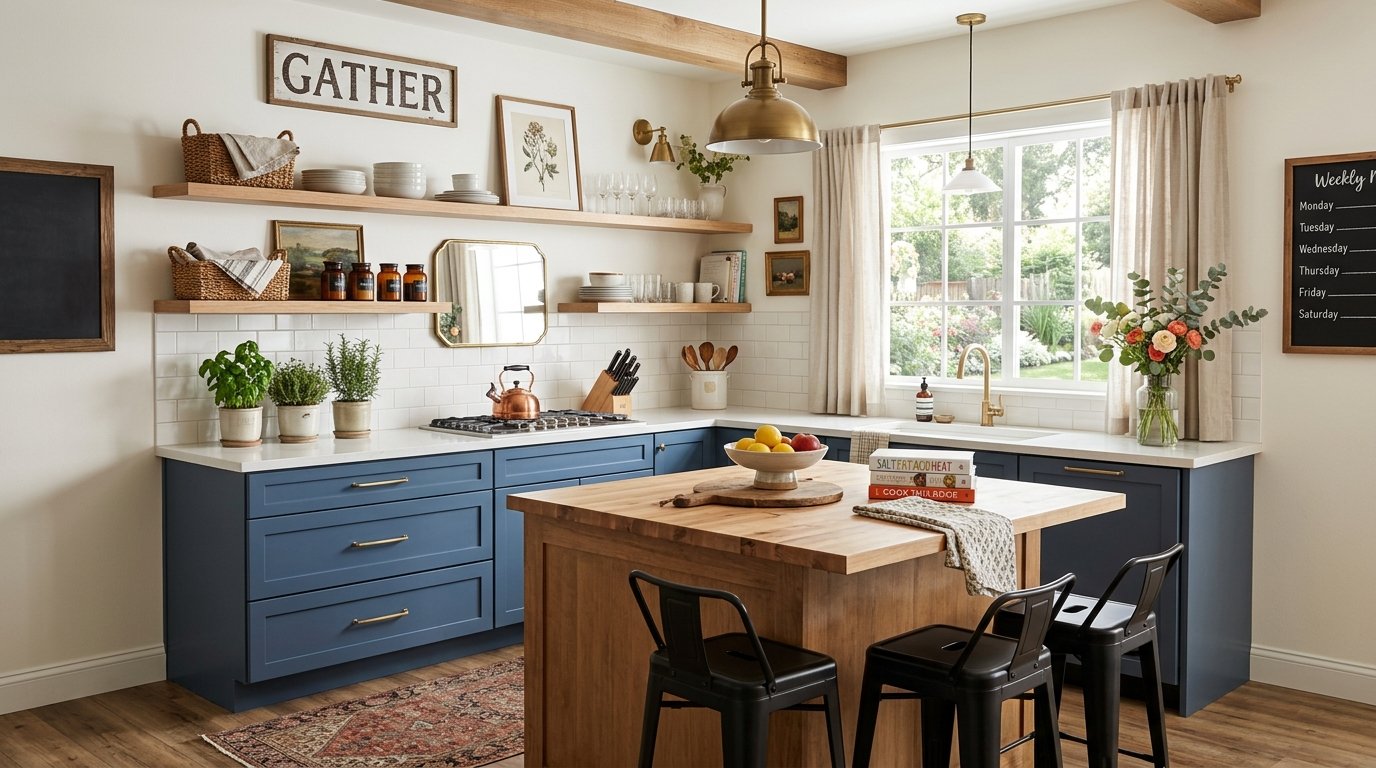
The kitchen is often called the heart of the home, and for good reason — it’s where meals come together, conversations happen, and people naturally gather. These kitchen decor ideas will help you turn a purely functional space into one that feels warm, styled, and genuinely enjoyable to spend time in, without sacrificing the practicality a kitchen needs every day.
1. Choose a Warm, Cohesive Color Palette
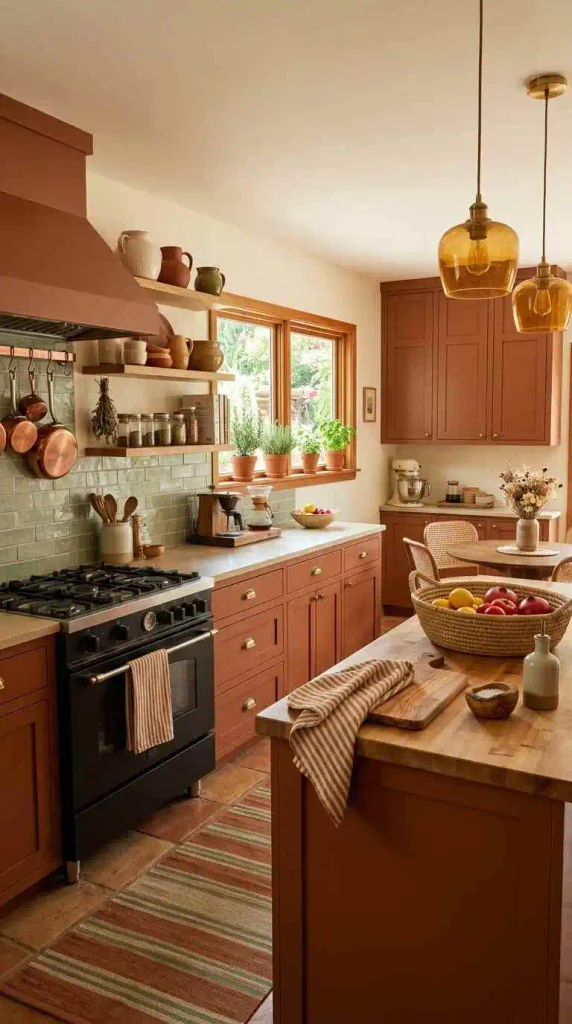
Start by choosing a palette that ties your cabinets, walls, and accents together — a warm white or soft neutral base paired with one or two deeper accent tones works well in almost any kitchen. Rich colors like sage green, terracotta, or a deep navy on lower cabinets or an island add character without overwhelming the space, especially when balanced with lighter upper cabinets or open shelving. Avoid choosing your color scheme piece by piece; instead, decide on your full palette upfront so every future purchase, from dish towels to a rug, has an obvious home within it. A cohesive palette is what makes a kitchen feel intentionally designed rather than assembled over time from unrelated choices.
Read more: Coffee Table Decor Ideas: Simple Ways to Style Your Table Like a Pro
2. Style Open Shelving Like a Designer
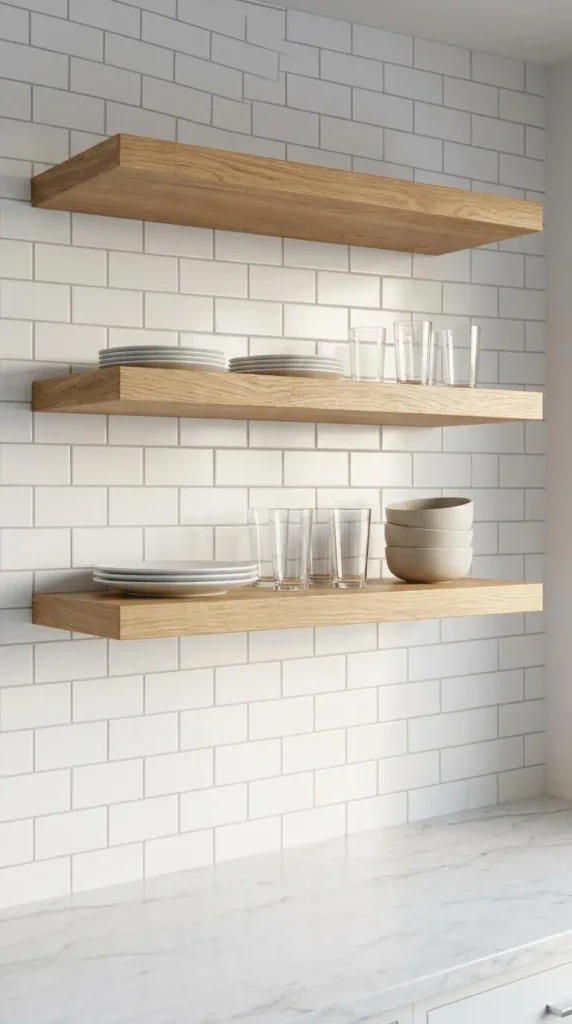
Open shelving is one of the most effective ways to add personality to a kitchen, but it only works when styled with restraint. Mix everyday items you actually use — plates, bowls, glassware — with a few decorative pieces like a ceramic vase or a small plant, and vary the height and shape of what you display. Leave visible breathing room between groupings rather than lining every shelf edge to edge, since an over-filled shelf reads as cluttered rather than curated. Stacking some items and standing others upright creates visual rhythm across the shelf. If you’re nervous about full open shelving, even one small floating shelf above a counter is enough to add character without sacrificing storage.
3. Add a Wood Cutting Board as a Styling Piece
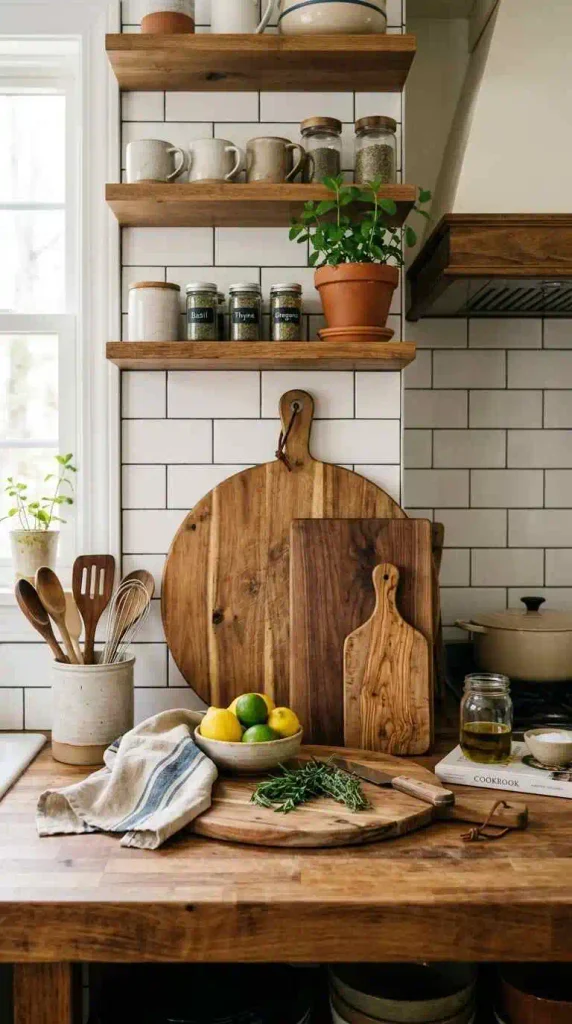
A wood cutting board isn’t just a kitchen tool — leaned casually against a backsplash or tile, it adds instant warmth and texture to an area that’s often just empty wall space. Choose a board with a natural, varied wood grain rather than a perfectly uniform finish, since the texture is what gives it visual interest. This is one of the easiest and lowest-cost ways to soften a kitchen that leans heavily on hard, cool surfaces like stone counters or stainless steel appliances. Rotate a few different boards in and out depending on the season or your mood, and use the same trick near your stove or sink for an easy, styled moment that costs almost nothing.
4. Layer in Warm, Layered Lighting
Overhead lighting alone rarely creates the warm, inviting atmosphere a kitchen benefits from, even though it’s essential for cooking tasks. Add under-cabinet lighting to illuminate countertops for both function and ambiance, and consider pendant lights over an island or sink for a stronger design statement. Stick to warm-toned bulbs in the 2700K–3000K range throughout, since cool white lighting can make even a beautifully designed kitchen feel clinical and sterile. If your kitchen has a dining or seating area attached, a statement pendant or small chandelier over that spot adds a layer of warmth that overhead recessed lighting alone can’t achieve. Dimmable lighting, where possible, lets the space shift from bright and functional to soft and relaxed during evening meals.
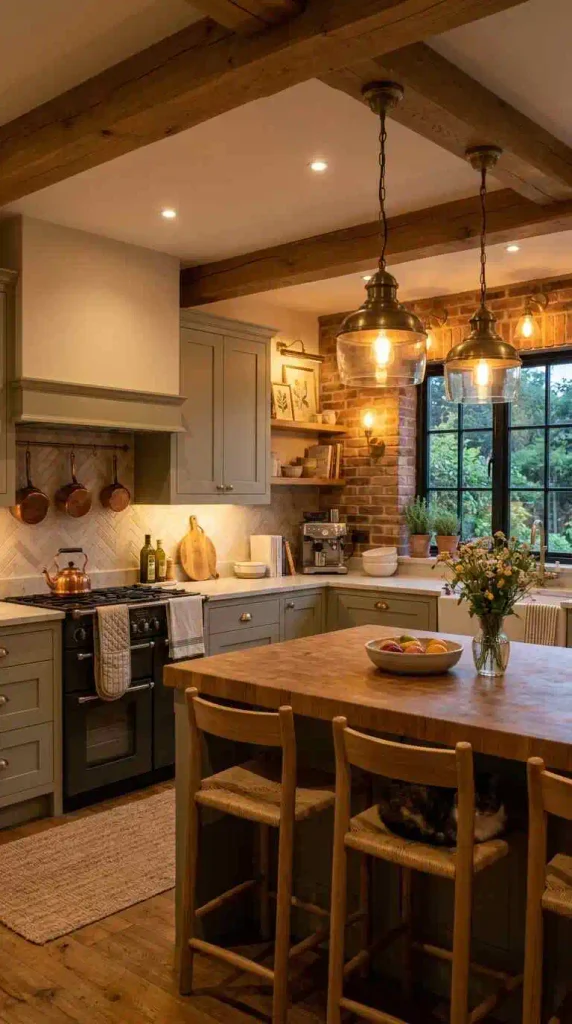
Read more: Small Kitchen Ideas Design: Simple Ways to Make a Small Kitchen Work Better
5. Bring In Seasonal, Rotating Touches
A kitchen that never changes can start to feel static, even when it’s beautifully designed. Small seasonal touches — a bowl of citrus in summer, a few gourds or pumpkins in fall, or a simple vase of fresh flowers any time of year — keep the space feeling fresh without requiring a full redecorate. Rotate a few key styling pieces, like a table runner or a set of dish towels, with the seasons to give your kitchen a sense of being cared for and current. This doesn’t need to be an elaborate or expensive habit; even swapping one or two small items every few months is enough to keep the space feeling alive rather than frozen in place.
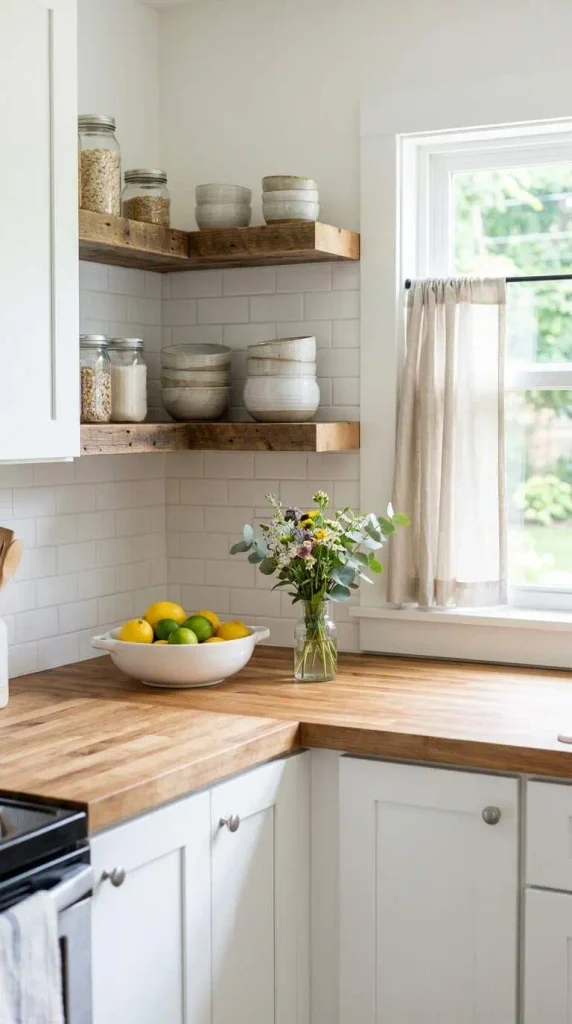
6. Add Greenery and Fresh Herbs
A few plants or a small herb garden on a windowsill do double duty in a kitchen, adding both visual life and genuine function. Fresh herbs like basil, mint, or rosemary in simple terracotta or ceramic pots soften a counter or windowsill while giving you something to actually cook with. If your kitchen doesn’t get much natural light, a low-maintenance plant like a pothos or snake plant on top of a cabinet or open shelf still adds greenery without the upkeep herbs require. Choose planters that match your overall kitchen palette so they feel like an intentional part of the space rather than an afterthought placed wherever there’s room.
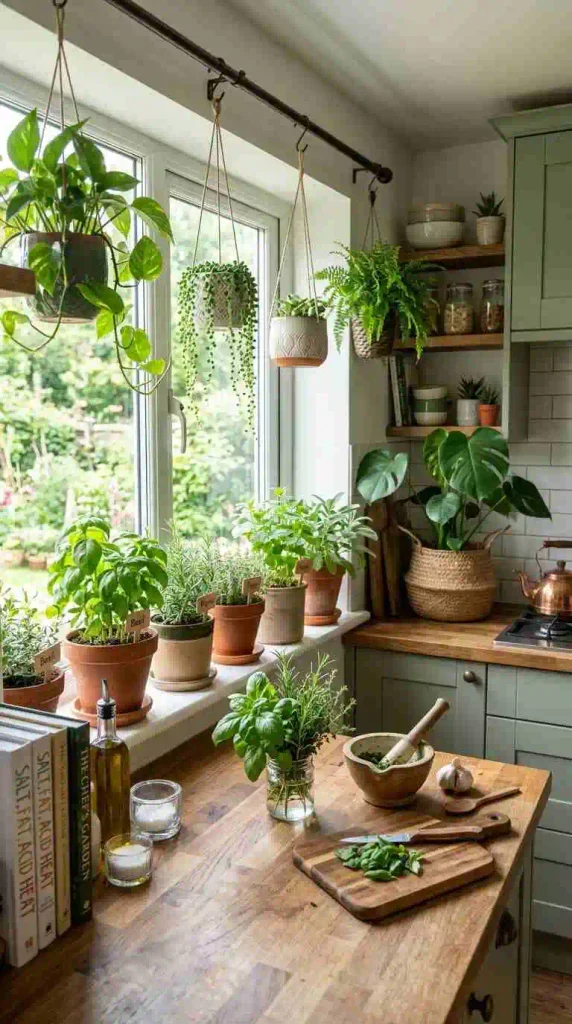
7. Layer Textiles for Softness
A kitchen built entirely from hard surfaces — stone counters, tile backsplashes, metal appliances — can start to feel cold no matter how well-designed it is. Soften the space with textiles: a woven table runner, patterned dish towels, or a stack of linen napkins add color and texture in small, easy-to-update doses. A cushioned bar stool or a runner rug in front of the sink also adds both comfort and visual softness underfoot. Because textiles are inexpensive relative to cabinetry or countertops, they’re one of the easiest ways to refresh your kitchen’s look seasonally or whenever you want a change, without touching anything structural.
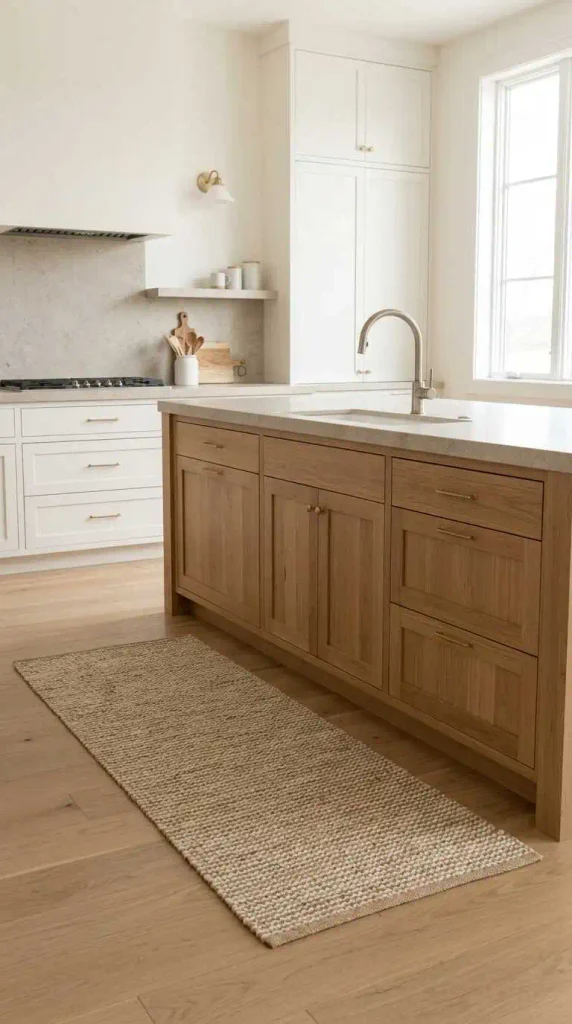
8. Style Your Island or Counter With Restraint
An island or main counter is often the visual centerpiece of a kitchen, so it deserves the same styling attention as a coffee table in a living room. A wood cutting board, a bowl of fruit, and a small vase or plant is typically enough — resist the urge to fill every inch of counter space with decorative objects. Leaving genuine negative space is what keeps a kitchen feeling calm and functional rather than cluttered, especially since counters need to remain usable for actual cooking and prep. If you entertain often, a styled tray with a few bottles or glasses can turn a corner of the island into an easy, elevated bar moment.
9. Add a Statement Backsplash or Tile Detail
A backsplash is one of the few places in a kitchen where a bolder design choice can pay off without overwhelming the whole room, since it’s a contained area. Consider a patterned or textured tile, a warm handmade-look ceramic tile, or a natural stone in a herringbone or vertical stack pattern for visual interest above the counter. If a full statement backsplash feels like too much commitment, even a smaller accent — like tile behind an open shelf or around a stove — can add character in a more contained way. A well-chosen backsplash often becomes a quiet focal point that ties the whole kitchen’s palette together.
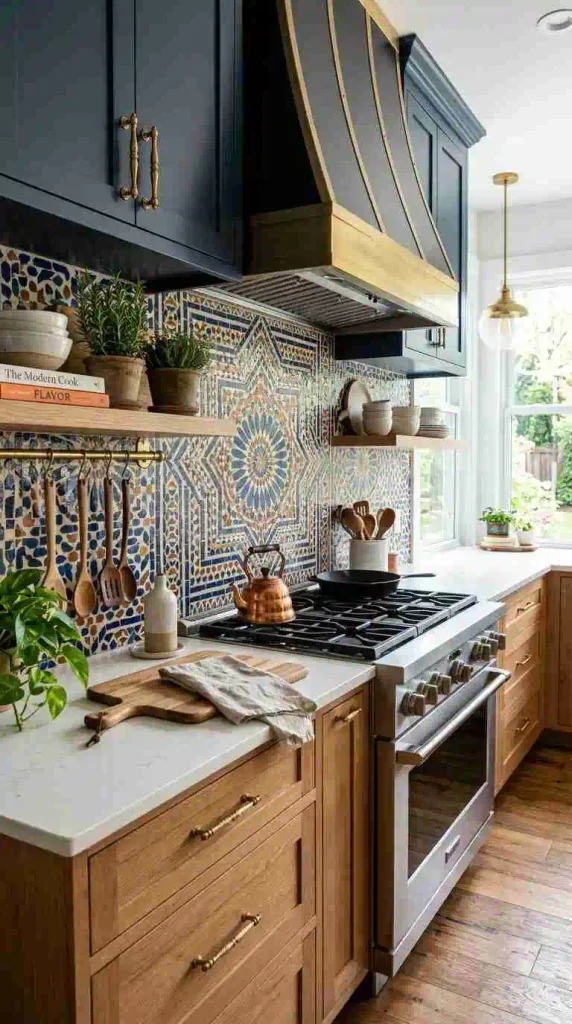
10. Display a Few Personal, Meaningful Objects
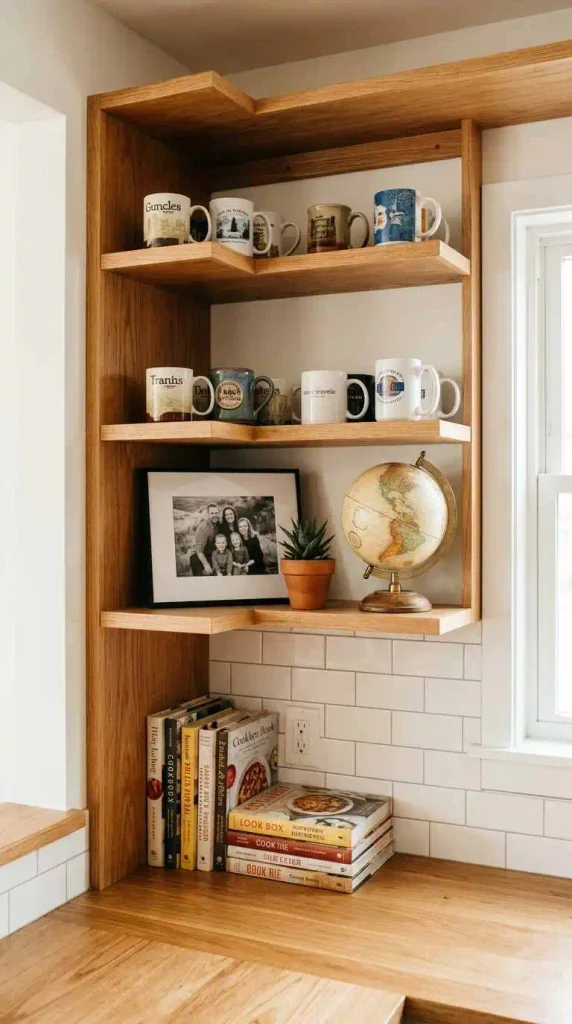
The details that make a kitchen feel truly personal are rarely the expensive ones. A favorite ceramic mug displayed on open shelving, a handwritten recipe card framed on the wall, or a piece of pottery picked up while traveling all add genuine character that can’t be replicated with a matching store-bought set. These small personal touches are what make a kitchen feel lived-in and loved rather than staged for a photo. Leave a little room in your styling for these details to be added gradually over time, since the most inviting kitchens are usually collected slowly through everyday life rather than designed all at once.
Read more: Balcony Decor Ideas for Apartments: Simple Ways to Love Your Small Outdoor Space
Final Thoughts
A beautifully decorated kitchen doesn’t require a full renovation — it comes from layering a cohesive color palette, warm lighting, a few styled surfaces, and small personal touches into a space that’s already built for daily use. Start with the details that cost the least and change the most, like lighting, textiles, and open shelving styling, and let the bigger updates follow when you’re ready. A kitchen that evolves naturally over time will always feel warmer than one designed and finished all at once.
7 Comments