
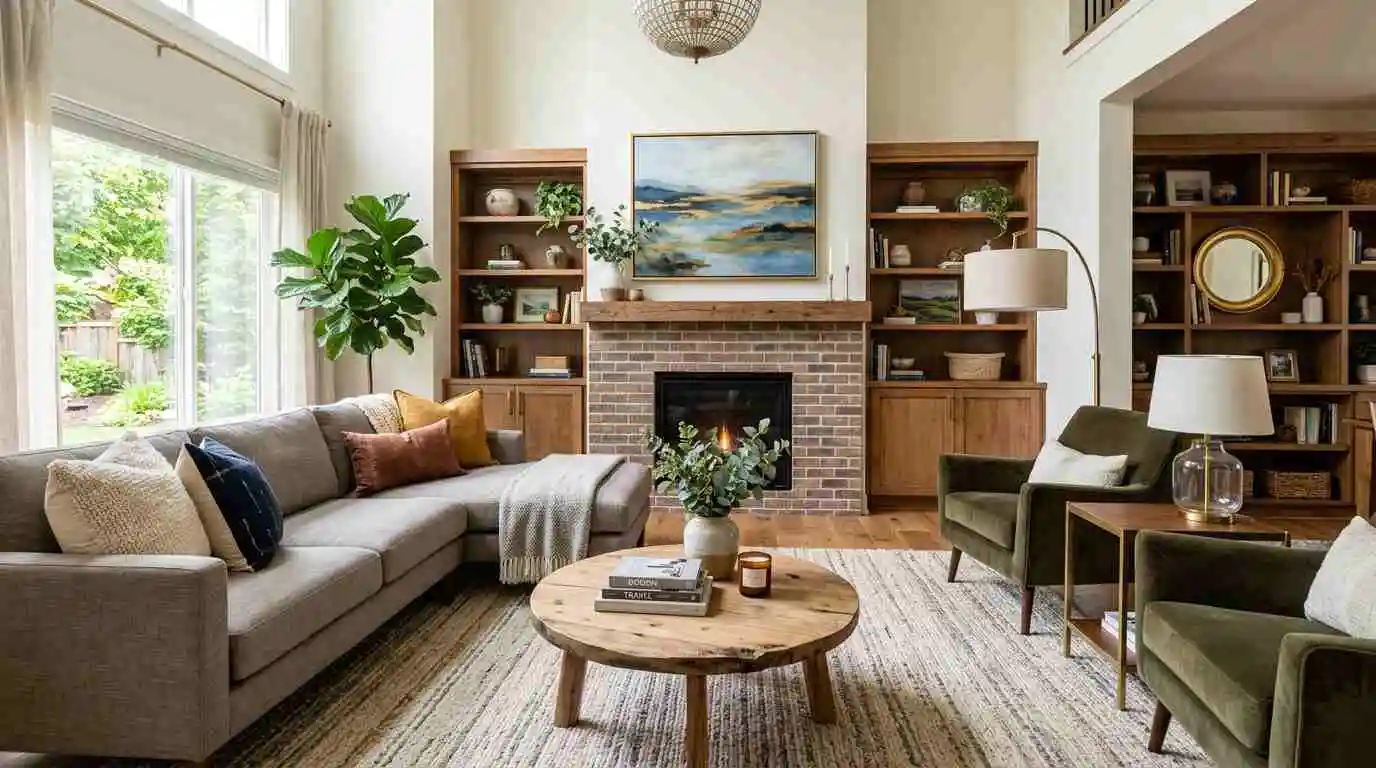
Living Room Design Ideas: Create a Stylish Space That Still Feels Like Home

Your living room works harder than almost any other room in the house — it’s where you relax after a long day, entertain guests, and spend the majority of your time at home. These living room design ideas will help you create a space that feels stylish, cohesive, and genuinely comfortable, without sacrificing the function a living room needs every single day.
1. Anchor the Room With a Grounding Rug
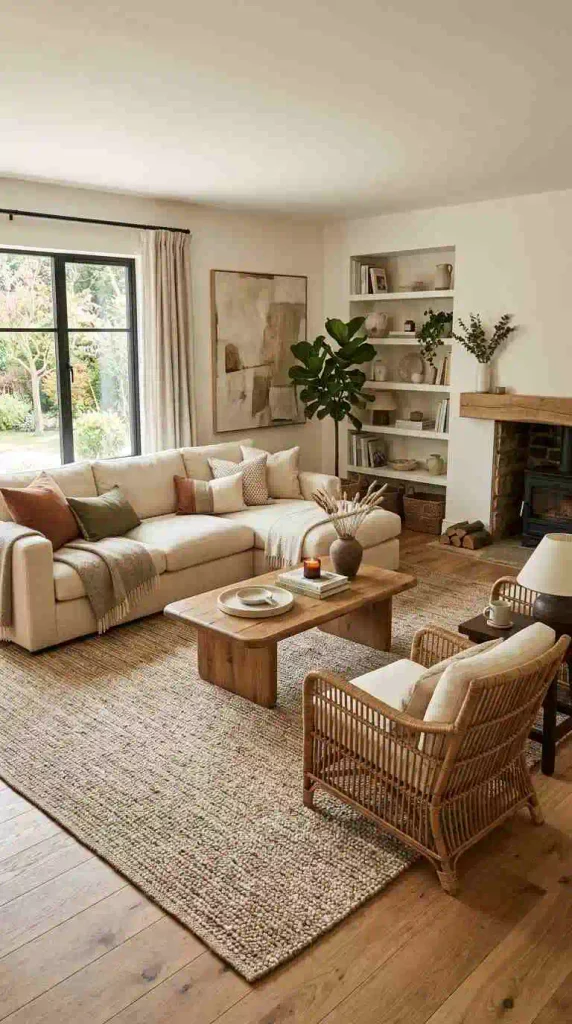
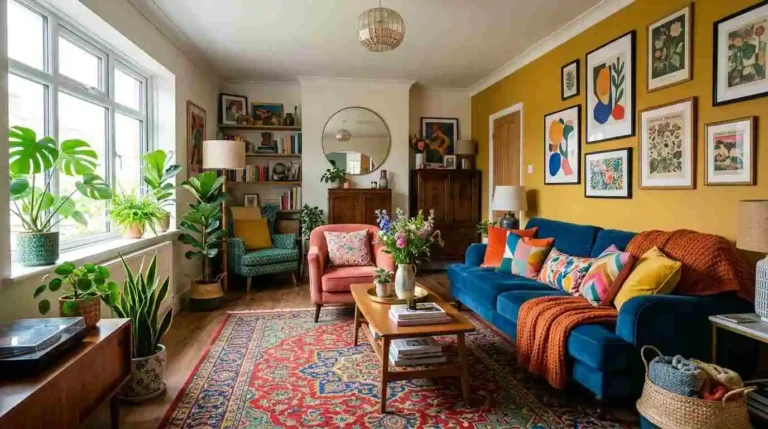
A large area rug does more to define a living room than almost any other single piece. As a general rule, all your front furniture legs should sit on the rug, which visually anchors the seating area and keeps the room from feeling disconnected. Choose a rug that complements your color palette rather than competing with it — a subtle texture or muted pattern tends to age better than a bold, trend-driven print. If your room feels cold or echoey, a slightly plusher rug material like wool adds warmth underfoot as well as visually. Sizing up is almost always the better choice; a rug that’s too small makes even a beautifully furnished room look unfinished and awkwardly proportioned.
Read more: House Design Interior Ideas: Simple Ways to Make Your Whole Home Look Beautiful
2. Arrange Furniture for Conversation, Not Just the TV
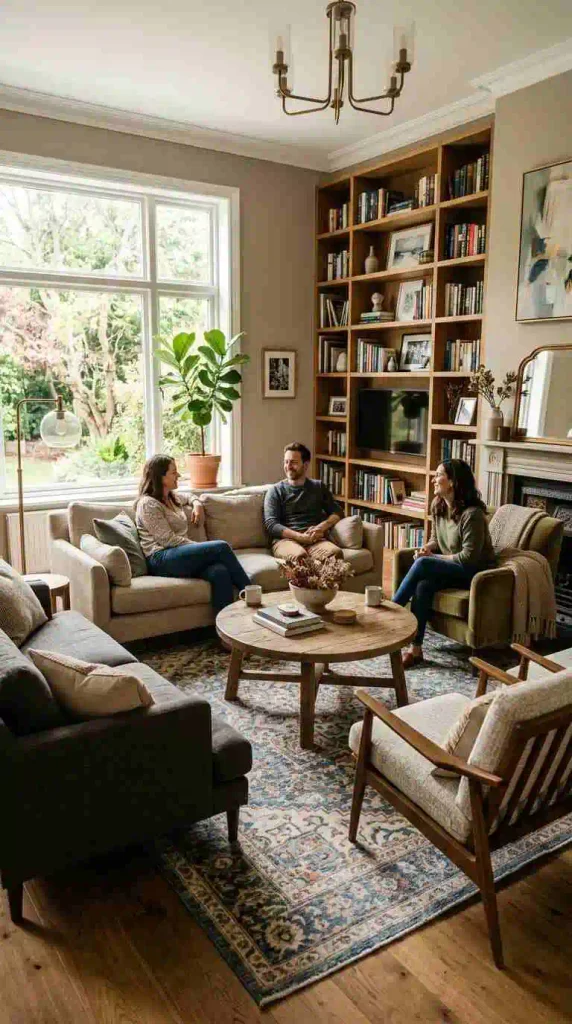
It’s easy to default to pointing every piece of seating straight at the television, but the most inviting living rooms are arranged to encourage conversation first. Angle chairs slightly toward the sofa, or use a sectional paired with one or two accent chairs to create a natural circle for people to gather in. Keep a comfortable distance between seating — close enough to talk easily, but not so tight that the room feels cramped. If the TV is a priority, it can still be part of the layout without being the sole focus; mounting it above a console or fireplace keeps it present without dominating the room’s overall design.
3. Choose a Sofa That Balances Comfort and Style
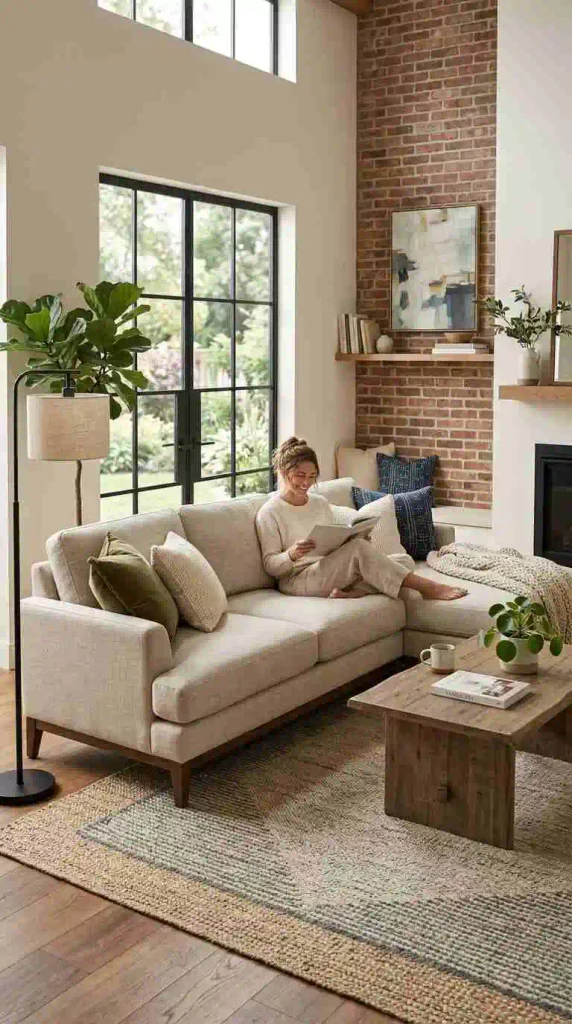
Your sofa is the single largest investment and focal point in most living rooms, so it deserves careful thought. Prioritize genuine comfort — cushion depth, seat height, and fabric feel — since this is the piece you’ll use daily. A neutral color for the sofa itself (in a durable, easy-to-clean fabric like performance velvet or a tight weave) gives you the most flexibility to change your color palette over time through pillows, throws, and art. If you want a bolder look, save that boldness for one statement piece elsewhere in the room rather than the sofa, which is harder and more expensive to replace than a pillow or a rug.
4. Layer in Warm, Ambient Lighting
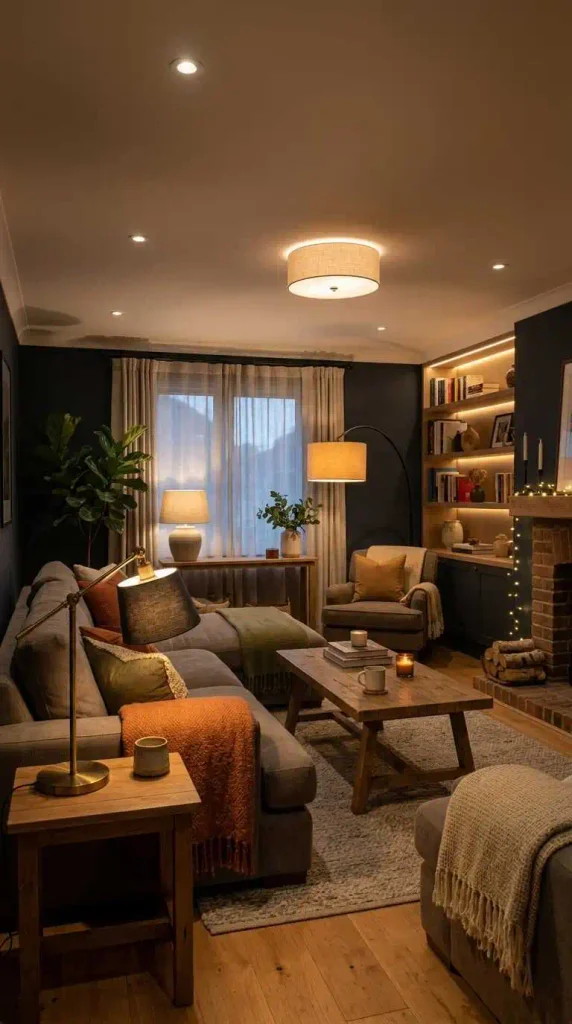
A single overhead light rarely does a living room justice. Layer at least three light sources: ambient lighting (overhead or natural light), task lighting (a reading lamp near a chair), and accent lighting (a floor lamp in a corner, or sconces flanking a media console). Stick to warm-toned bulbs in the 2700K–3000K range, since cool white lighting tends to make even beautifully designed rooms feel sterile. Dimmers are a small investment that make a significant difference, letting the room shift easily from bright and functional during the day to soft and relaxed in the evening. Well-placed lighting is often the difference between a room that looks nice and one that actually feels good to spend time in.
Read more: Dining Room Decor Ideas: Simple Ways to Make Mealtime Feel Special
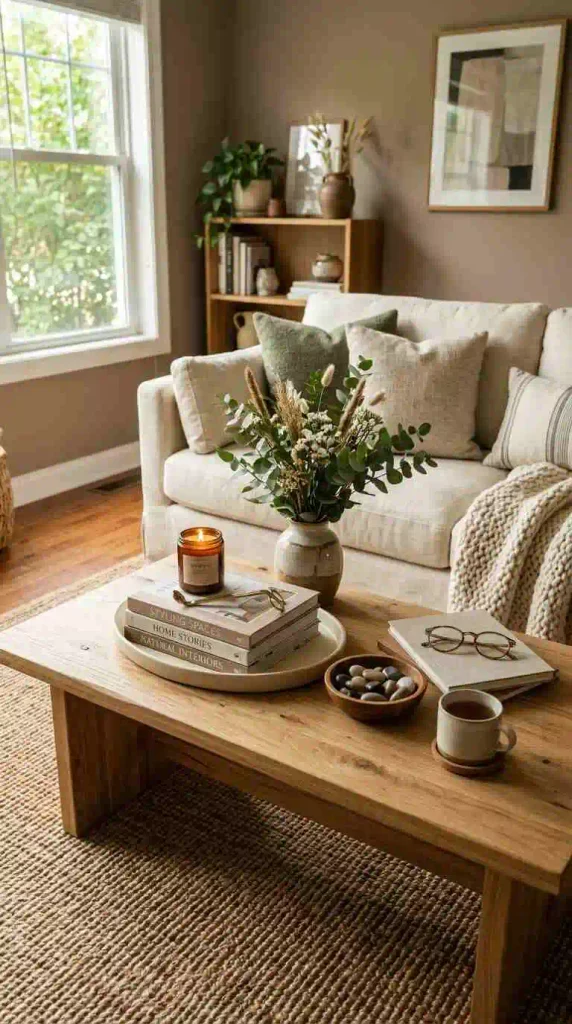
5. Style Your Coffee Table With Intention
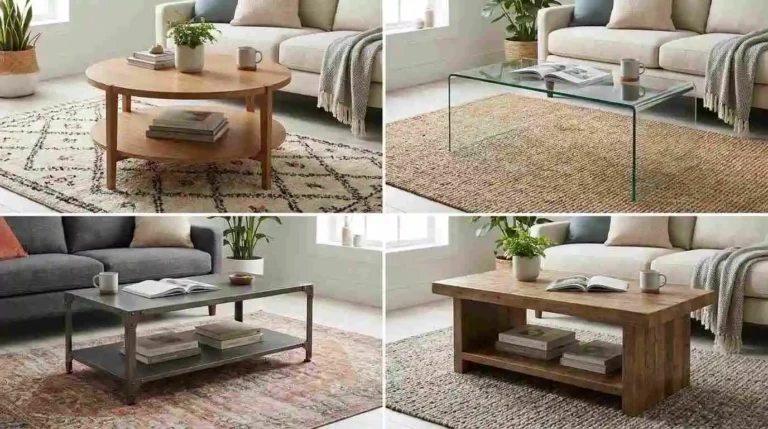
A coffee table is one of the most visible surfaces in the room, so it’s worth styling thoughtfully rather than leaving it cluttered with mail and remotes. Group a few objects in odd numbers — a stack of coffee table books, a ceramic bowl or tray, and a small plant or vase is a formula that works in nearly any style. Vary the height of each item so the eye has somewhere to travel across the surface. Leave some visible negative space rather than filling every inch, since an over-styled table can look just as cluttered as an unstyled one. A tray is also a practical trick — it corrals everyday items like coasters or a remote while still looking intentional.
6. Layer Textures for Warmth and Depth
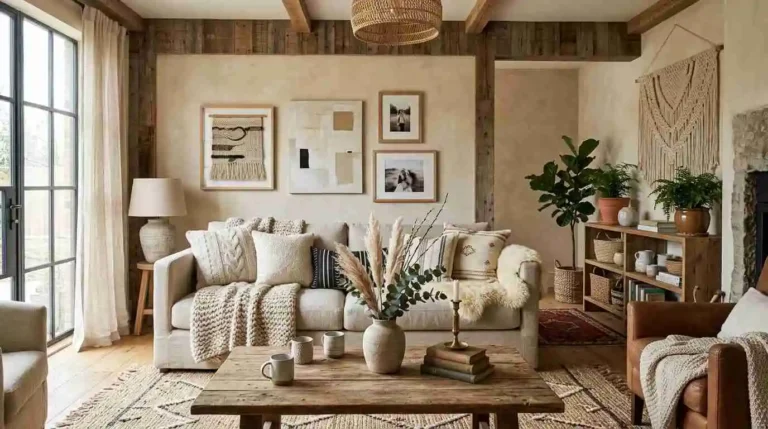
A living room built entirely from smooth, matching surfaces tends to feel flat no matter how nice the furniture is. Mix at least three textures throughout the space — a chunky knit throw over the sofa, a smooth leather accent chair, a woven jute rug or basket, and a few matte ceramic accessories. This kind of contrast is what makes a neutral-toned room feel rich and inviting rather than empty or under-decorated. When shopping for new pieces, resist buying everything in the same finish or fabric; pairing something soft with something structured is a simple trick that instantly elevates the whole room’s feel.
7. Make One Wall or Feature the Focal Point
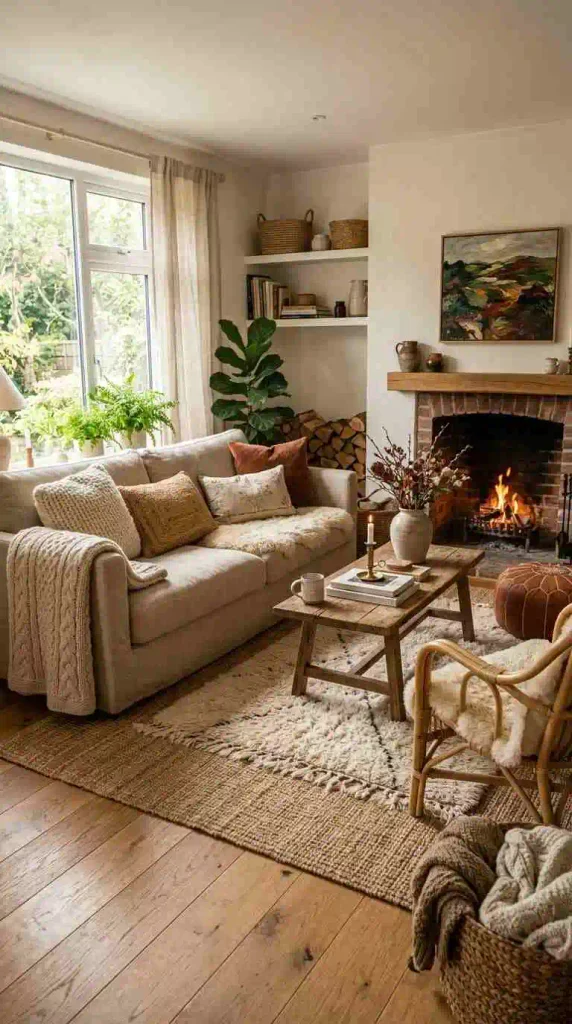
Every well-designed living room has one feature the eye is naturally drawn to first — a fireplace, a gallery wall, an oversized piece of art, or a bold accent wall in a rich color. Once you’ve identified (or created) that focal point, style the rest of the room to support it rather than compete with it. If you have a fireplace, treat the mantle the way you would a coffee table: vary heights, mix materials, and add one larger anchor piece like a mirror or art above it. Too many competing focal points is one of the fastest ways to make a living room feel visually busy instead of calm and intentional.
8. Add Built-Ins or Open Shelving for Character
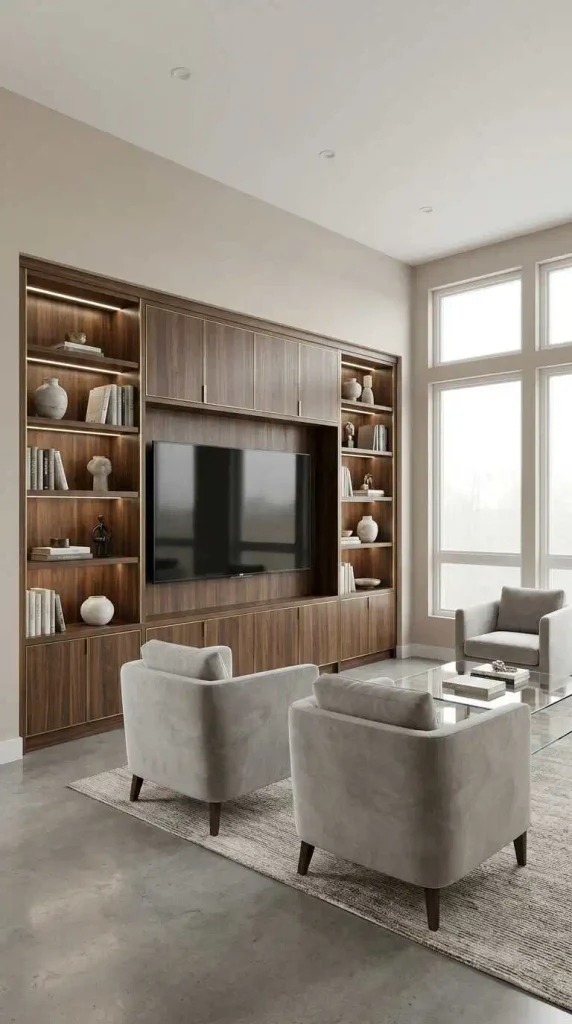
Built-in shelving around a fireplace or media console adds both storage and a huge amount of visual interest to a living room. If built-ins aren’t an option, a well-styled bookshelf or open shelving unit achieves a similar effect. Style shelves the way you would a coffee table — mix books (some stacked flat, some upright), a few decorative objects, and a plant or two, while still leaving visible breathing room between groupings. Avoid lining every shelf edge to edge, since this reads as cluttered rather than curated. Shelving is also one of the easiest ways to display personal items like travel finds or family photos without them feeling out of place.
9. Bring in Plants and Natural Elements
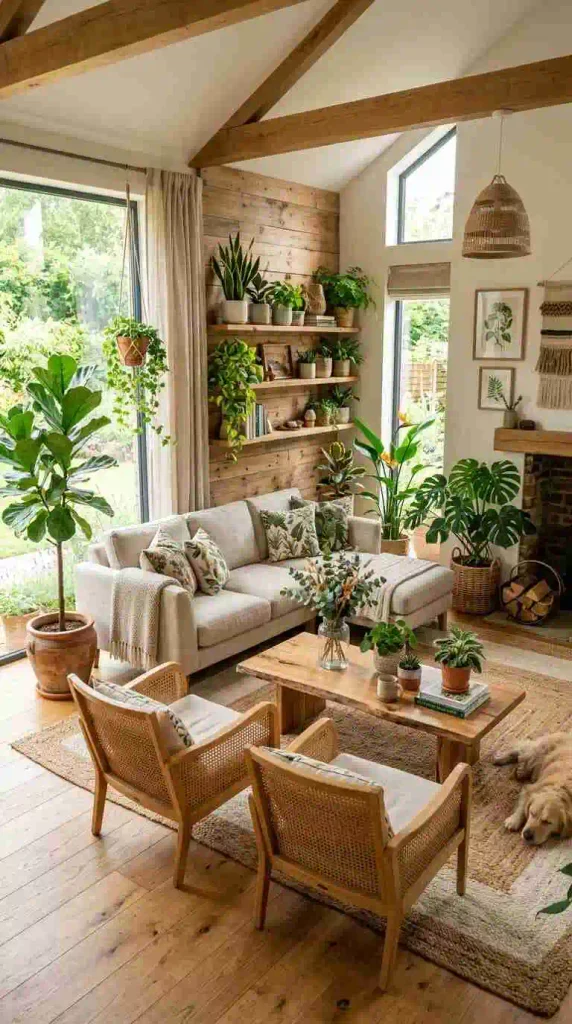
A few well-placed plants soften the hard lines of furniture and architecture and instantly make a living room feel more alive. A larger floor plant, like a fiddle leaf fig or an olive tree, works well in an empty corner to fill vertical space without adding bulk. Smaller plants on shelves, side tables, or the coffee table add life on a more intimate scale. If maintaining live plants isn’t realistic, high-quality faux versions or a bowl of dried branches can achieve a similar organic feel with far less upkeep. Choose plant styles that match your room’s overall aesthetic — structured and upright for a modern space, trailing and loose for a boho or eclectic one.
10. Mix in Vintage or One-of-a-Kind Pieces
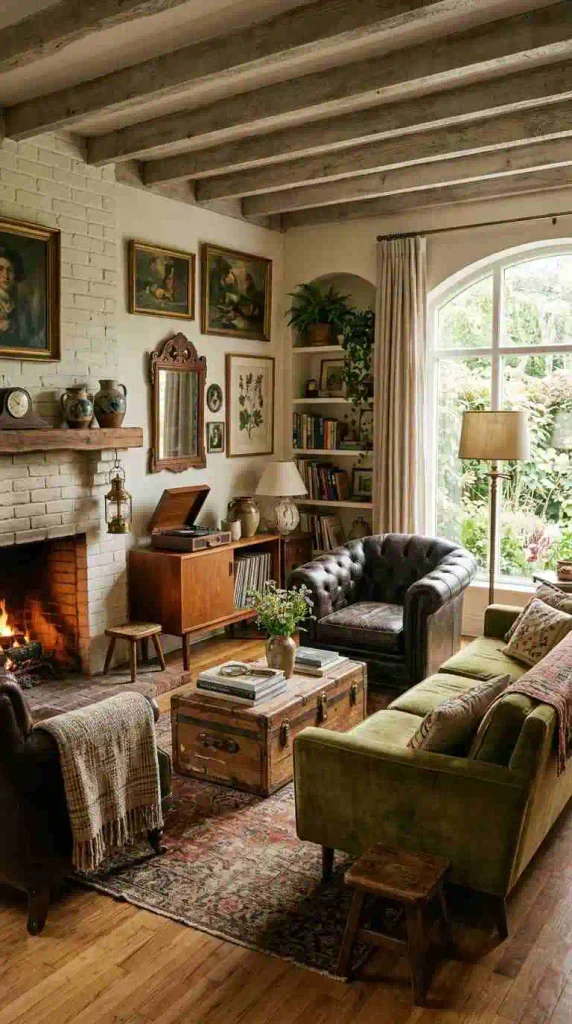
Furnishing a living room entirely from one matching set is convenient but often results in a space that feels generic and impersonal. Introducing even one vintage or antique piece — a side table, a rug, or an accent chair — adds a layer of character and history that new, mass-produced furniture simply can’t replicate. The same goes for original art or a sculptural object; a single piece that genuinely means something to you often has more impact than a set of coordinated prints chosen purely to match. These layered, personal touches are usually what guests remember most, and they’re what makes a living room feel like it belongs to real people rather than a catalog page.
Read more: Outdoor Lawn Decor Ideas: Simple Ways to Make Your Yard Feel Special
11. Choose Window Treatments That Soften the Room
Curtains do more than provide privacy — they add softness, height, and polish to a living room. Hang curtain rods as close to the ceiling as possible and let the panels fall just past the floor, which makes windows (and the whole room) feel taller and more elevated. A light, flowing fabric like linen adds movement and a relaxed feel, while a heavier fabric like velvet adds warmth and a more formal touch. If your windows already get plenty of natural light, sheer panels layered under a solid curtain give you flexibility between privacy and brightness throughout the day.
12. Keep the Room Balanced With Negative Space
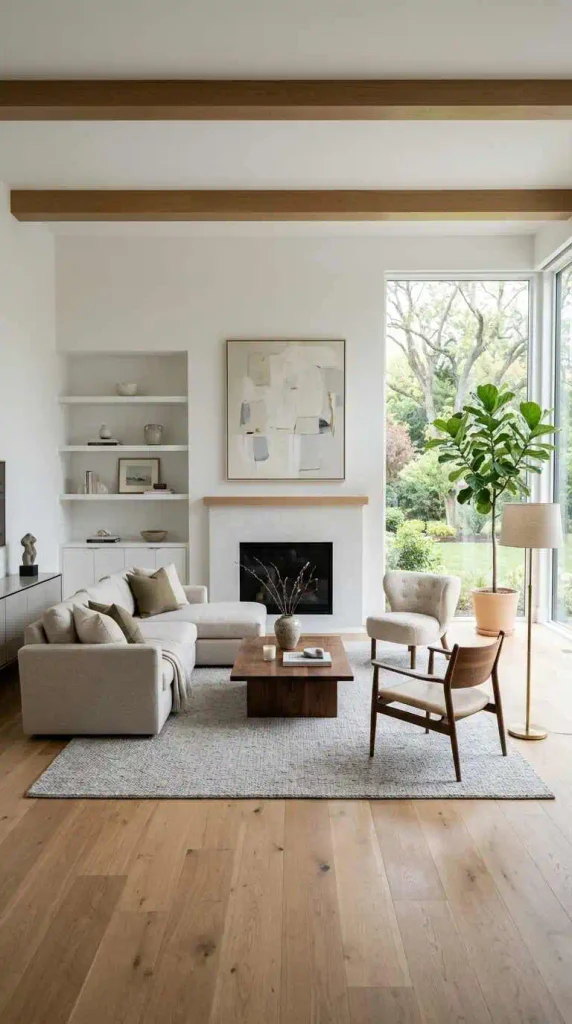
It’s tempting to fill every corner of a living room with furniture and decor, but some of the most elevated spaces are defined as much by what’s left out as what’s included. Leave a little breathing room around furniture groupings rather than pushing every piece against the walls. A slightly under-furnished room with a few well-chosen pieces almost always looks more intentional than an overcrowded one filled with mismatched extras. As you finish decorating, step back and remove one item if the room starts to feel busy — restraint is often the difference between a room that looks professionally designed and one that just looks full.
Read more: Coffee Table Decor Ideas: Simple Ways to Style Your Table Like a Pro
Final Thoughts
A great living room isn’t built from a single trend or a single big purchase — it’s the result of a grounding rug, thoughtful furniture arrangement, layered lighting, and a few personal touches working together. Start with the basics — a well-chosen rug, comfortable seating, and warm lighting — and let the smaller styling details layer in over time. A living room that’s allowed to evolve naturally will always feel more genuine than one designed all at once.
10 Comments