
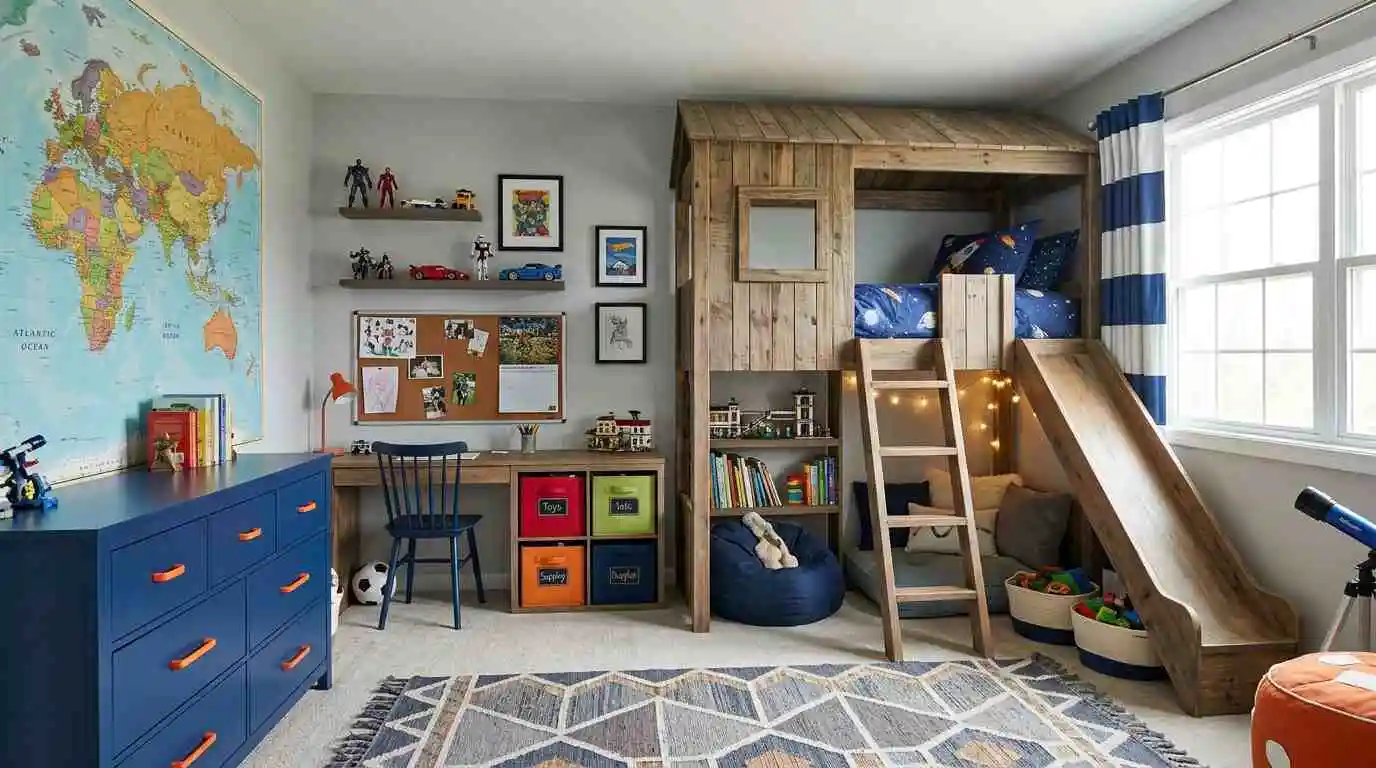
Kids Bedroom Ideas for Boys: Create a Fun, Functional Space That Grows With Him

A boy’s bedroom needs to do a lot — spark imagination, hold up to everyday play, and still feel calm enough for a good night’s sleep. These kids bedroom ideas for boys will help you design a space that’s playful and personal now, while staying flexible enough to grow alongside him for years to come.
1. Choose a Palette That Can Grow With Him
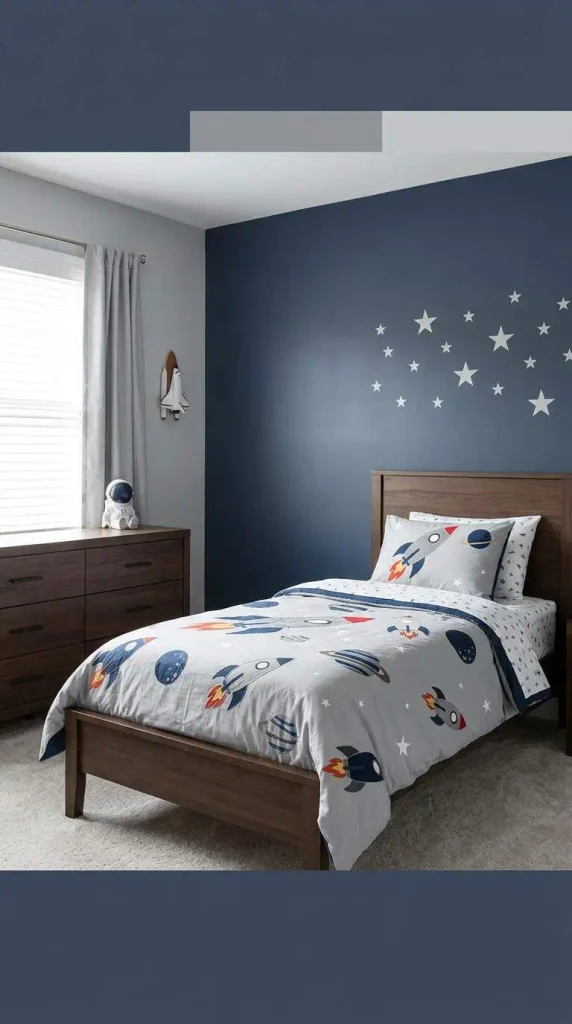
Rather than committing to a fully themed room that he’ll outgrow in a year or two, start with a flexible color palette — a warm neutral base like soft gray, greige, or warm white, paired with one or two accent colors he genuinely loves. Deep navy, forest green, or a warm mustard all work well as accent tones that feel age-appropriate without reading as babyish. Keep bolder or trend-driven colors to easily changeable items like bedding, artwork, or a rug rather than paint or furniture, so the room can evolve simply by swapping a few pieces as his tastes change. This approach saves money long-term and keeps the room feeling current well into his teenage years.
Read more: Balcony Decor Ideas for Apartments: Simple Ways to Love Your Small Outdoor Space
2. Build in Durable, Multi-Purpose Furniture
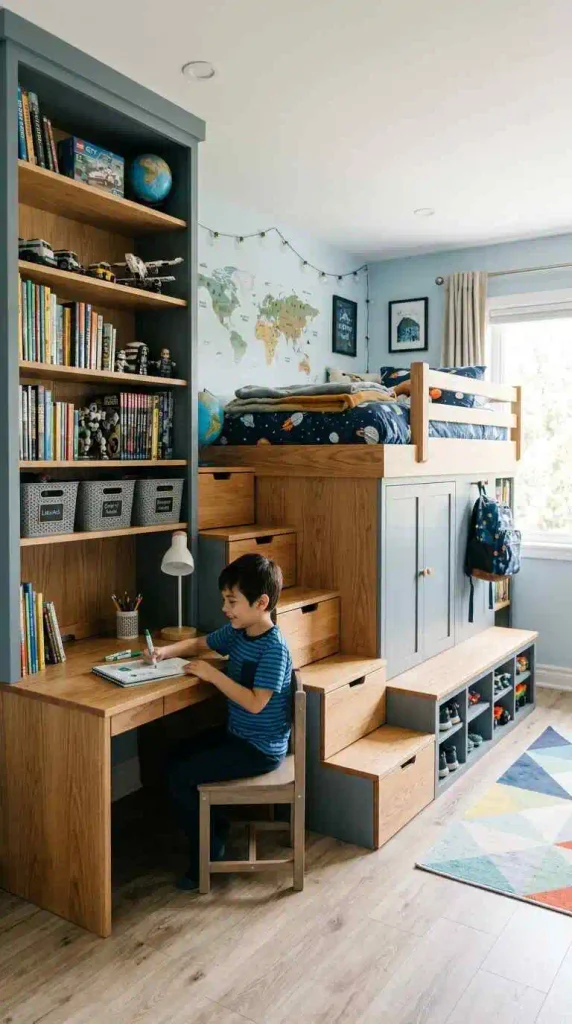
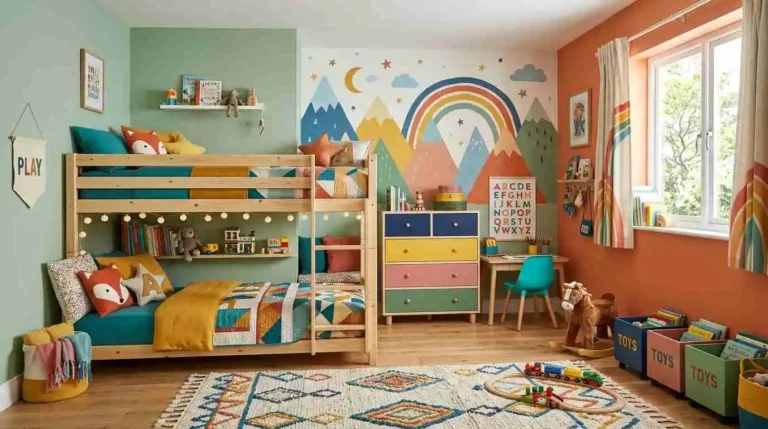
Boys’ bedrooms see a lot of activity, so furniture needs to be both durable and functional. A bed with built-in storage drawers underneath maximizes space in smaller rooms, while a sturdy desk gives him a dedicated spot for homework and creative projects as he gets older. Choose furniture in solid wood or a durable laminate that can handle daily wear rather than delicate finishes that show every scuff. Bunk beds or a loft bed with a desk underneath are excellent options for shared rooms or smaller spaces, since they free up valuable floor space for play. Investing in slightly more grown-up furniture now, rather than furniture with cartoon characters built in, means fewer replacements as he grows.
3. Add a Fun, Playful Accent Wall
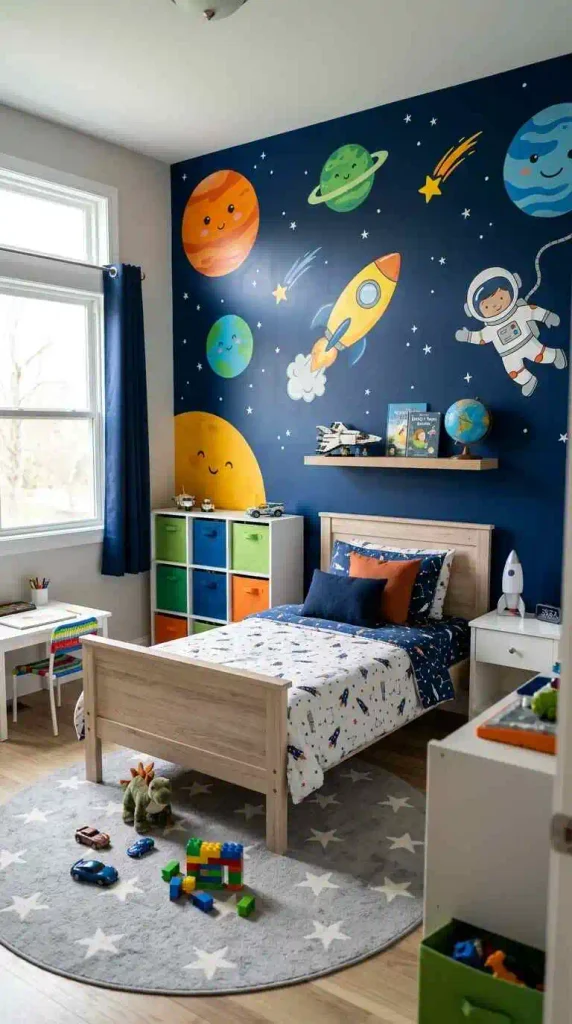
An accent wall is one of the easiest ways to add personality without overcommitting the whole room to one theme. Consider a bold paint color, a subtle geometric wallpaper, or even a chalkboard-painted section where he can draw and doodle freely. A mural — whether hand-painted or a removable wallpaper version — can bring in a specific interest like space, dinosaurs, or sports without requiring you to redo the entire room later. Because this is contained to a single wall, it’s also one of the simplest updates to change entirely as his interests shift over the years, without needing to repaint or redesign the whole space.
4. Create a Dedicated Play or Reading Corner
Setting aside even a small corner of the room for play or reading gives him a defined space that’s just for fun, separate from the bed and desk areas. A soft rug, a bean bag or small floor cushion, and a low shelf for books or toys within easy reach are enough to create this zone. A canvas teepee or a simple reading nook with string lights adds an extra layer of coziness that kids tend to love. Keeping this area visually distinct — through a different rug or a slightly different color zone — helps the room feel organized into clear purposes rather than one big open space with everything mixed together.
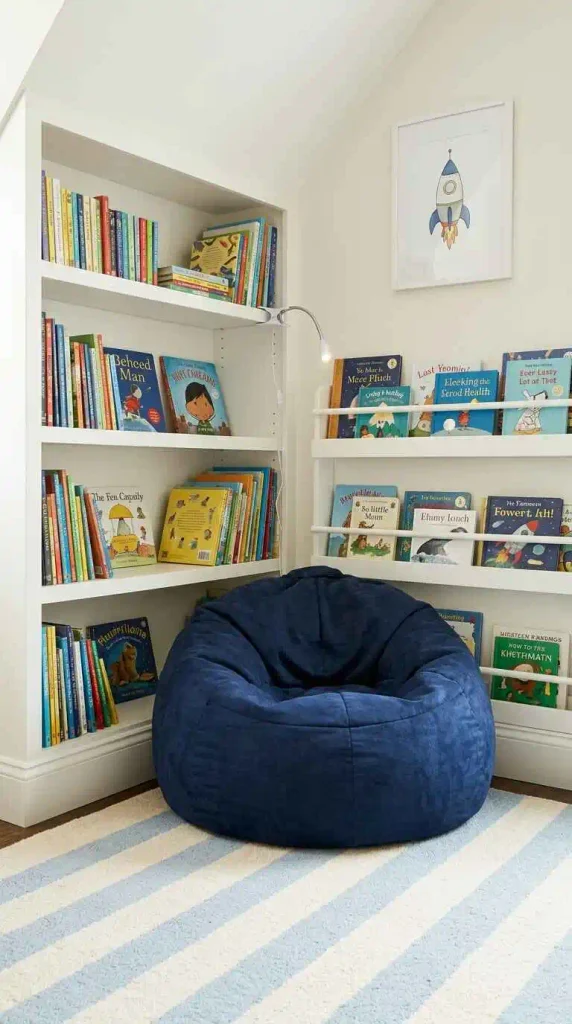
5. Use Smart, Accessible Storage
Good storage is one of the most important — and most overlooked — elements of a functional kids’ bedroom. Open bins or baskets at a low height let him put toys away himself, which builds independence and keeps clutter from taking over the whole room. Labeled shelving or cubbies help sort toys, books, and games into clear categories, making cleanup faster and less overwhelming for both of you. A closet organizer system with lower rods and shelves makes it easier for him to reach his own clothes as he gets older. Choosing storage that’s functional now but not overly juvenile in style means it can stay useful well beyond the early years.
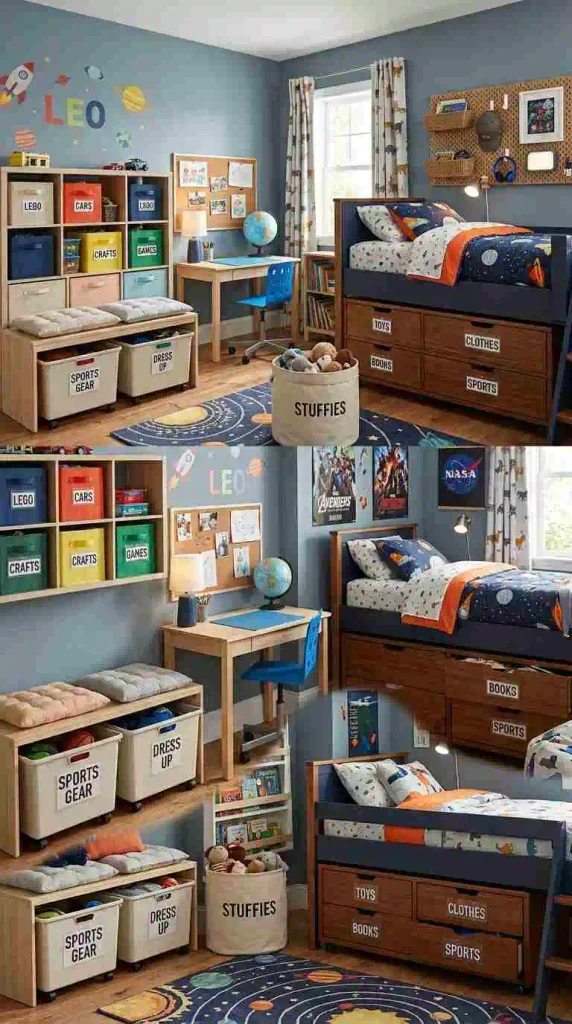
Read more: Small Kitchen Ideas Design: Simple Ways to Make a Small Kitchen Work Better
6. Layer in Warm, Functional Lighting
A single overhead light is rarely enough for a room that needs to handle homework, play, and sleep. Add a desk lamp for focused task lighting, and a soft nightlight or dimmable lamp near the bed for a gentler option at bedtime. String lights or a fun-shaped lamp — like a rocket, a globe, or a simple geometric shape — add a playful touch while still being genuinely useful. Warm-toned bulbs throughout help the room feel cozy rather than clinical, which matters for a space that also needs to help him wind down at night. Dimmable options are especially helpful for an easier bedtime transition as he gets a little older.
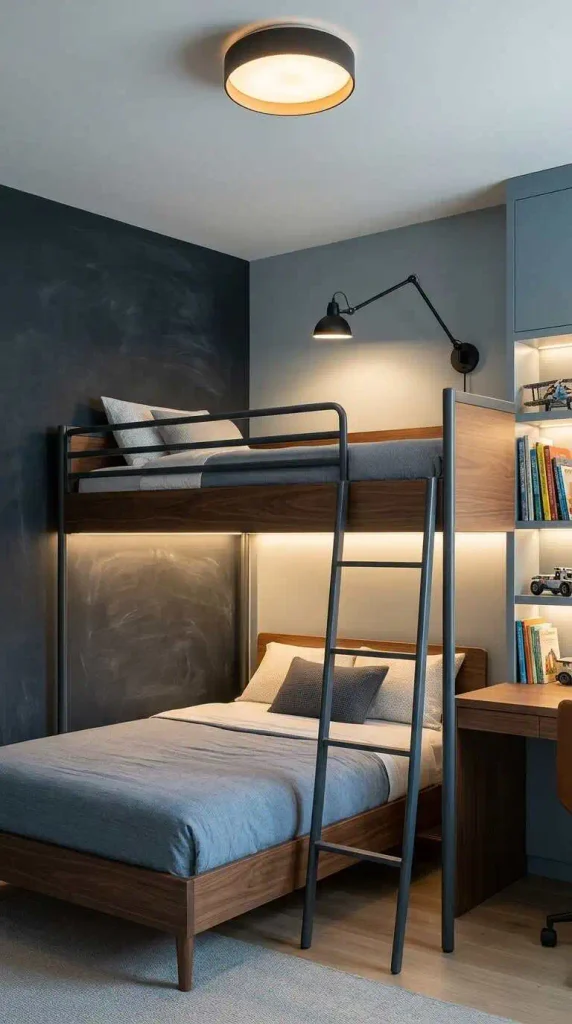
7. Display His Interests Without Overcommitting
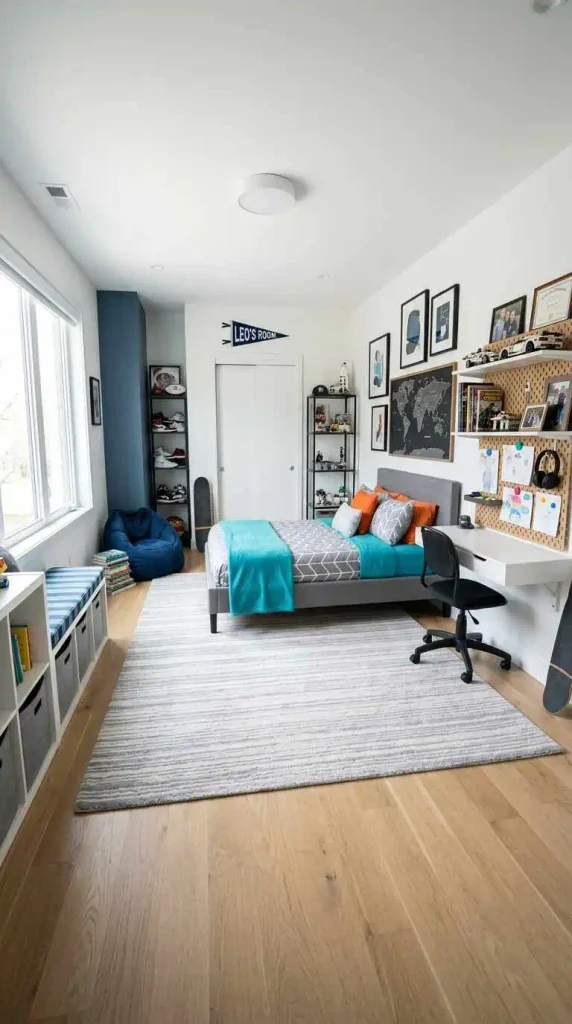
Whatever he’s into right now — dinosaurs, space, sports, cars — can be woven into the room through easily changeable elements rather than a full theme. A gallery wall of posters or prints, a shelf displaying his favorite collectibles, or a few themed throw pillows let his current interests shine without locking the whole room into one look he’ll outgrow. This approach also gives him a sense of ownership over the space, since he can help choose what gets displayed. As his interests naturally shift over time, these smaller elements are easy and inexpensive to swap out, without needing to repaint or replace furniture.
8. Add a Cozy, Durable Rug
A soft rug adds warmth underfoot and defines different zones within the room, whether that’s a play area, a reading corner, or the space at the foot of the bed. Choose a rug in a durable, easy-to-clean material, since kids’ rooms see spills, art projects, and plenty of foot traffic. A patterned rug in a neutral base with one or two accent colors hides everyday wear better than a plain, solid-colored option. Sizing the rug generously — large enough for most of the furniture to sit at least partially on it — helps the room feel grounded and complete rather than sparse.
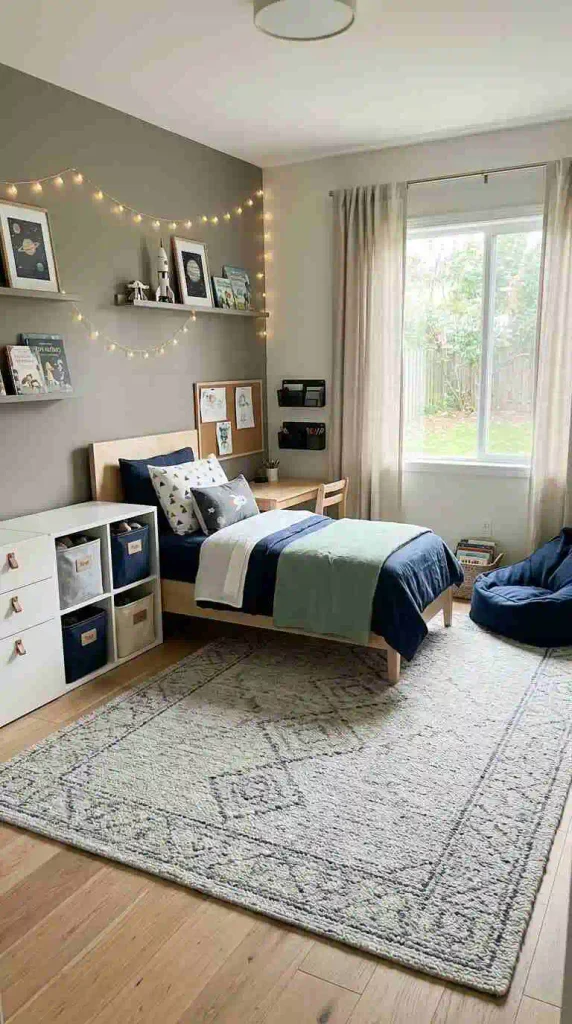
9. Keep the Bed Cozy but Low-Maintenance
Bedding is one of the easiest and most affordable ways to update a boy’s room as his tastes change. Choose durable, easy-to-wash sheets and a comforter in a pattern or color he’s currently excited about, paired with a few solid accent pillows so the whole look isn’t overly busy. A folded blanket at the foot of the bed adds a cozy, finished look without much effort. Because bedding is simple and inexpensive to replace, it’s the ideal place to let his current obsession — whether that’s dinosaurs this year or basketball next year — show up fully, without committing anything more permanent to that same theme.
10. Leave Room for Him to Personalize It
The most meaningful kids’ bedrooms are rarely ones designed entirely by an adult with no input from the child. A corkboard or magnetic board for displaying his own artwork, a shelf for trophies or handmade projects, or simply letting him choose a few accent pieces gives him genuine ownership over the space. This doesn’t mean giving up all design control — it means building a flexible, well-designed foundation and leaving intentional room within it for his personality to show through. A room that reflects both thoughtful design and his own personal touches will almost always feel more special to him than one that’s perfectly styled but entirely chosen for him.
Read more: Patio Decor Ideas Outdoor: Simple Ways to Make Your Patio Feel Special
Final Thoughts
A great kids’ bedroom for boys balances durability, function, and flexibility with genuine personality and fun. Start with a solid, adaptable foundation — a flexible palette, durable furniture, and smart storage — then layer in his current interests through easily changeable details like bedding, art, and accessories. Designed this way, the room can grow and change right alongside him for years, without needing a full redo every time his interests shift.
2 Comments