Kids Room Color Ideas: Fun and Stylish Colors for a Happy Space

Choosing the right color for a kids’ room can make the space feel fun, comfortable, creative, and welcoming. From soft pastels to playful accent colors, the right combination can grow with your child while keeping the room stylish. Here are some simple kids room color ideas to help you create a cheerful and beautiful space.
1. Soft Pastels for a Calm Room
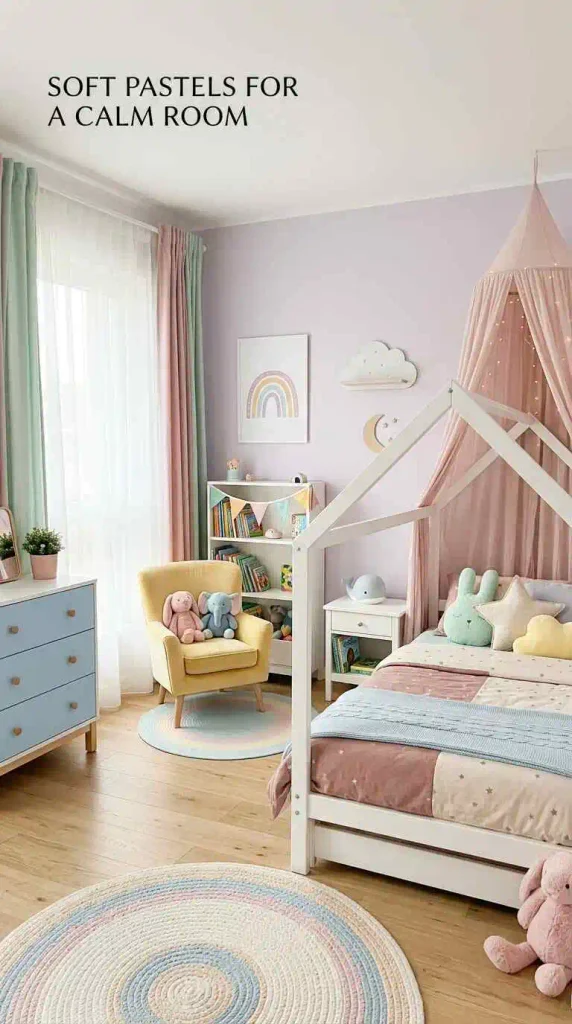
Soft pastel colors are a beautiful choice for creating a peaceful kids’ room. Shades like light blue, blush pink, soft green, lavender, cream, and pale yellow can add personality without making the room feel overwhelming. Pastels work especially well on walls because they provide color while maintaining a light and airy appearance. You can combine several pastel shades through bedding, curtains, rugs, and artwork rather than painting every wall a different color. Keep furniture in white, light wood, or neutral tones to maintain balance. If you enjoy soft and cozy interiors, explore [Modern Kitchen Design: Stylish Ideas for a Beautiful and Functional Space] for inspiration on using gentle colors and comfortable textures.
2. Create a Bright and Playful Space
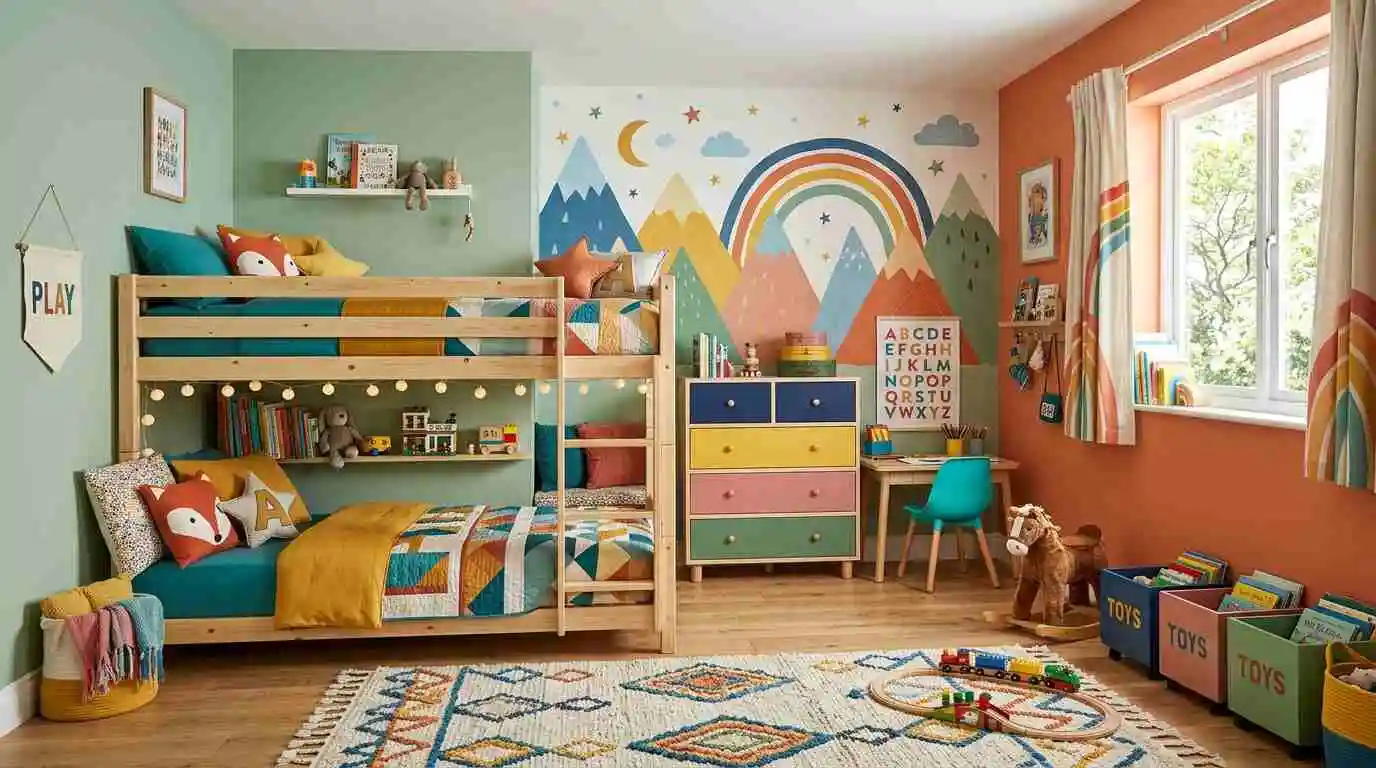
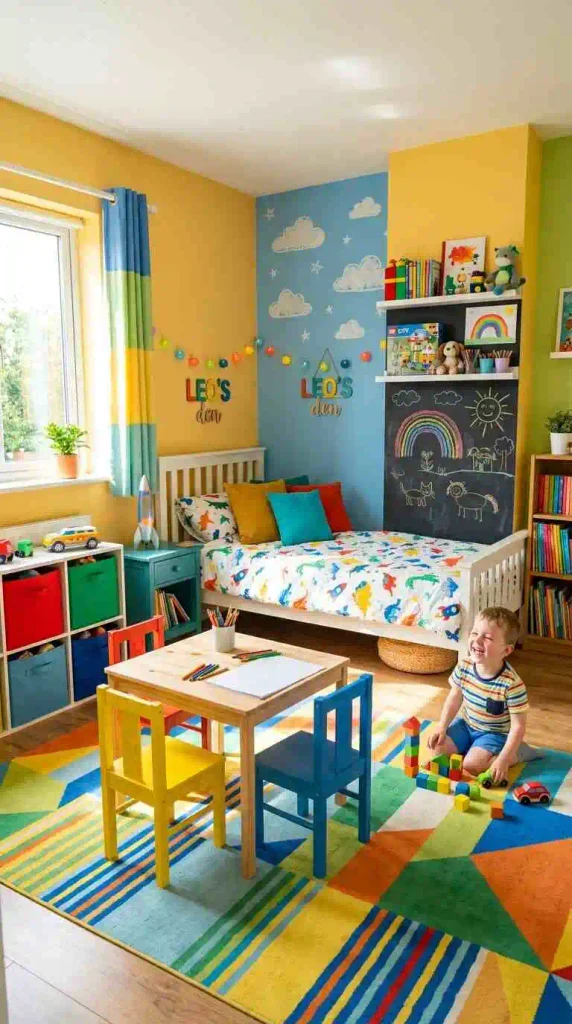
Kids’ rooms are perfect places to experiment with cheerful colors. Consider using sunny yellow, coral, turquoise, sky blue, or playful green to create an energetic atmosphere. Instead of covering every wall with a bright shade, choose one accent wall and keep the remaining walls neutral. You can also introduce colorful elements through bedding, toys, artwork, shelves, and rugs. This makes it easier to update the room as your child grows. Balance bright colors with white, beige, or natural wood furniture so the space doesn’t feel too busy. A playful color palette can encourage creativity while making the room feel lively and enjoyable.
3. Try a Nature-Inspired Palette
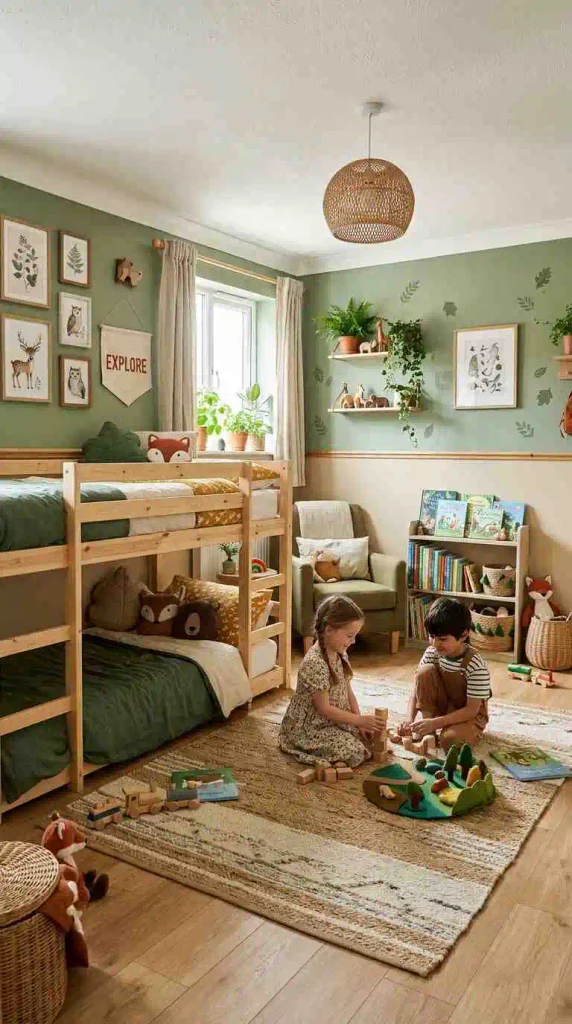
Nature-inspired colors can create a relaxing environment while still giving a kids’ room plenty of personality. Shades of sage green, olive, earthy beige, soft brown, sky blue, and warm cream work beautifully together. These colors can be paired with wooden furniture, woven baskets, plants, and nature-themed artwork. A soft green wall can create a calming backdrop while colorful accessories add playful details. Nature-inspired palettes are also easy to update because they don’t feel strongly tied to a particular age or trend. If you like using natural tones and textures throughout your home, explore [Modern Dining Room Decor Ideas: Create a Stylish and Welcoming Space] for additional inspiration.
4. Use a Fun Accent Wall
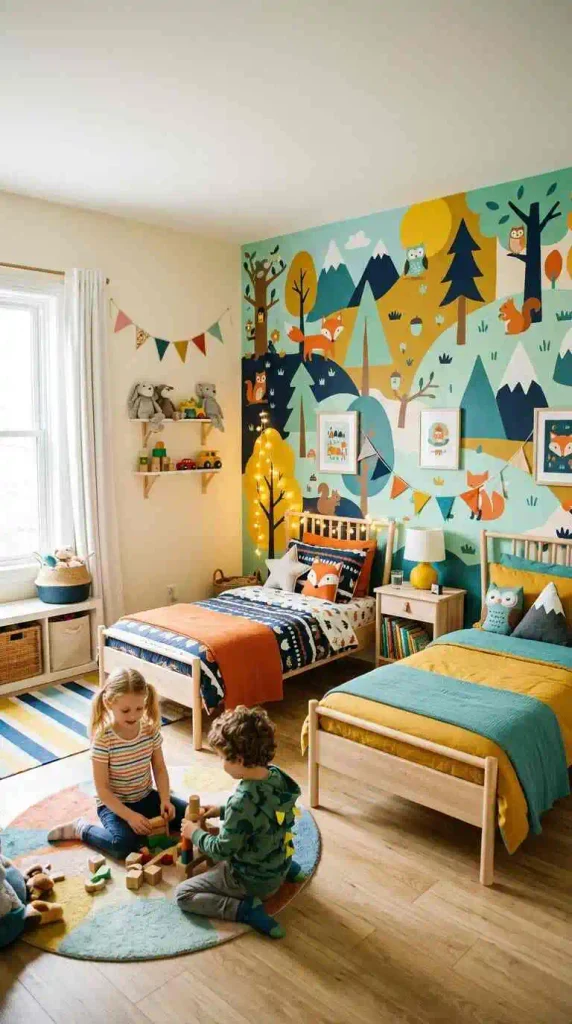
An accent wall can be a great way to introduce a bold color without overwhelming the entire bedroom. Choose a wall behind the bed, desk, bookshelf, or play area and give it a playful shade or pattern. Depending on your child’s personality, you could use navy blue, terracotta, mustard yellow, forest green, or a soft pink. Wallpaper, painted shapes, stripes, arches, or simple geometric designs can make the wall even more interesting. Keep the remaining walls relatively neutral so the accent wall becomes the focal point. For more inspiration on creating colorful focal walls, explore [Modern Home Lighting Ideas: Stylish Ways to Brighten Your Space].
5. Combine Blue With Warm Neutrals
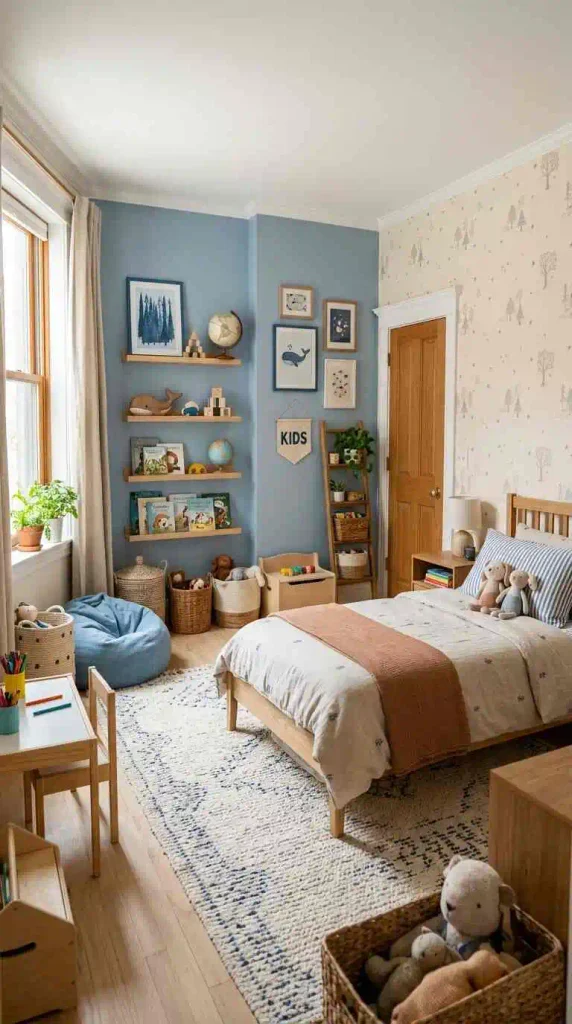
Blue is a versatile color that can work beautifully in a child’s bedroom. Instead of using only one shade, combine soft blue, navy, cream, beige, or warm white to create a balanced look. Light blue can make the room feel bright and peaceful, while navy can add depth and contrast. Warm neutral furniture and wooden accessories can prevent blue from feeling too cold. Add colorful artwork, bedding, or toys to give the room a playful touch. This color combination can easily grow with your child because it works with both playful childhood decor and more mature furniture as they get older.
6. Add Warm Yellow Accents
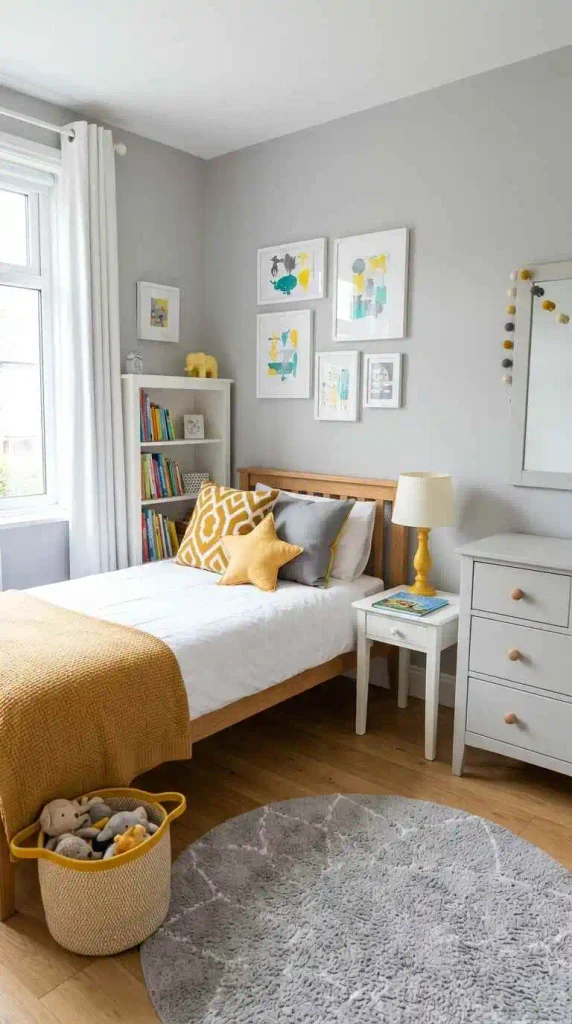
Yellow can bring energy and happiness to a kids’ room, but using it as an accent rather than the main wall color can create a more balanced result. Try soft yellow cushions, curtains, artwork, rugs, lamps, or bedding against neutral walls. Mustard yellow can create a more sophisticated appearance, while sunny yellow gives the room a cheerful and playful feel. Combine yellow with white, gray, blue, or natural wood for a cohesive palette. If the room receives plenty of natural sunlight, use softer yellow tones to avoid making the space feel too intense. Small yellow accents can brighten the room without dominating the overall design.
7. Create a Cozy Neutral Kids’ Room
Neutral colors aren’t only for adult spaces. A kids’ room decorated with cream, beige, warm white, light gray, and natural wood can feel calm while still being playful. Add personality through colorful books, toys, artwork, bedding, and soft accessories. This approach creates a flexible background that can easily change as your child’s interests develop. Textured rugs, woven baskets, and cozy blankets can make the room feel warm and comfortable. If you prefer simple interiors that still feel inviting, explore [Small Living Room Decor Ideas: Stylish Ways to Make the Most of Your Space] for ideas on using neutral colors and keeping spaces organized.

8. Mix Two Complementary Colors
Using two main colors can create a fun and coordinated kids’ room without making the design complicated. Choose complementary shades such as blue and yellow, green and cream, pink and beige, or lavender and soft gray. Use one color as the main shade and the second as an accent throughout the room. For example, green walls can be paired with cream furniture and small yellow accessories. Repeating the same colors in the bedding, artwork, curtains, and rugs will make the room feel connected. This approach gives children a colorful space while maintaining a polished and organized appearance.

9. Add Color Through Furniture and Decor
You don’t always need to paint the walls to create a colorful kids’ room. Keep the walls neutral and introduce color through chairs, bookshelves, storage bins, rugs, bedding, artwork, and toys. This approach gives you much more flexibility because accessories can be changed easily as your child grows. A colorful rug can become the centerpiece of the room, while bright cushions and artwork add smaller pops of color. Choose two or three accent shades and repeat them throughout the space. This creates a playful atmosphere without making the room feel chaotic. It is also a practical option for parents who want an easy-to-update bedroom.
10. Choose Colors That Grow With Your Child
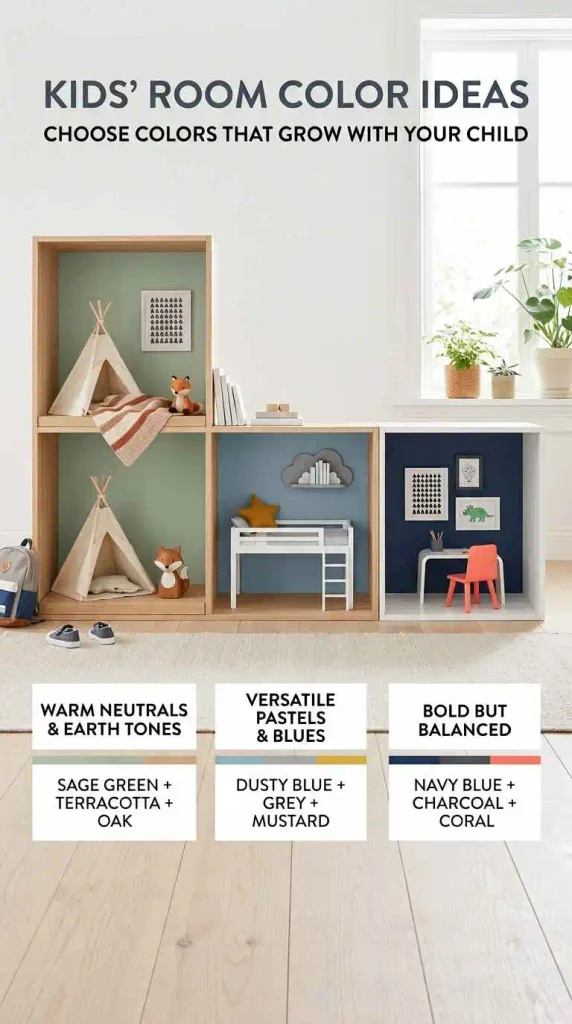
When choosing kids room colors, think about how the room will look several years from now. Very specific themes and extremely bright colors may become less appealing as children grow. Instead, consider timeless wall colors with playful accessories that can easily be replaced. Soft green, warm beige, light blue, cream, gray, and muted terracotta can work for different ages. Let your child’s personality show through artwork, bedding, toys, and decorative items rather than making every permanent feature themed. This approach can save time and money while creating a bedroom that feels personal, stylish, and adaptable.
Final Thoughts
The best kids room color ideas balance fun, comfort, creativity, and flexibility. Soft pastels can create a peaceful atmosphere, while bright accents can add energy and personality. Nature-inspired colors and neutral backgrounds can also create a timeless room that grows with your child. When choosing colors, consider natural lighting, furniture, room size, and your child’s preferences. For more inspiration on using color and texture throughout your home, explore [Bedroom Color Ideas: Simple Colors to Make Your Room Feel Calm and Cozy] and experiment with different combinations. With a thoughtful color palette, you can create a kids’ room that feels cheerful, comfortable, and uniquely theirs.