
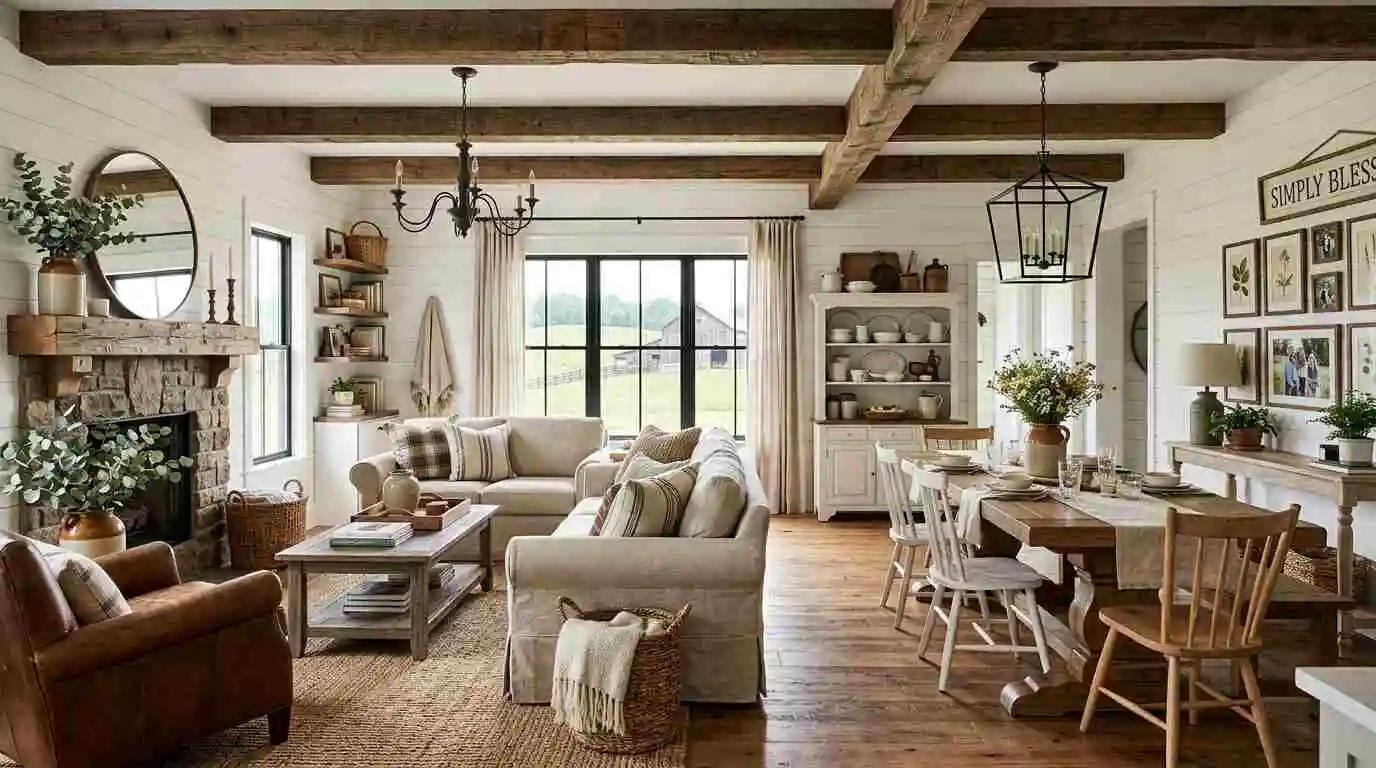
Farmhouse Interior Decor Ideas: Create a Warm and Timeless Home

Farmhouse interior decor is loved for its warm atmosphere, natural materials, comfortable furniture, and timeless character. You don’t need to live in the countryside to enjoy this style. By combining wood, neutral colors, vintage-inspired details, and cozy textiles, you can create a farmhouse-inspired home that feels relaxed and welcoming.
1. Start With Warm Neutral Colors
A farmhouse interior usually works best with a soft and neutral color palette. Choose shades such as warm white, cream, beige, taupe, soft gray, and earthy brown for your walls and larger furniture pieces. These colors create a calm foundation that allows natural materials and decorative details to stand out. You can introduce deeper shades through black hardware, dark wood, woven baskets, or simple artwork. Avoid using too many bright colors because farmhouse design is generally relaxed and understated. If you enjoy warm neutral interiors, explore [Small Living Room Decor Ideas: Stylish Ways to Make the Most of Your Space] for more inspiration on creating inviting spaces with soft colors and layered textures.
2. Bring in Natural Wood
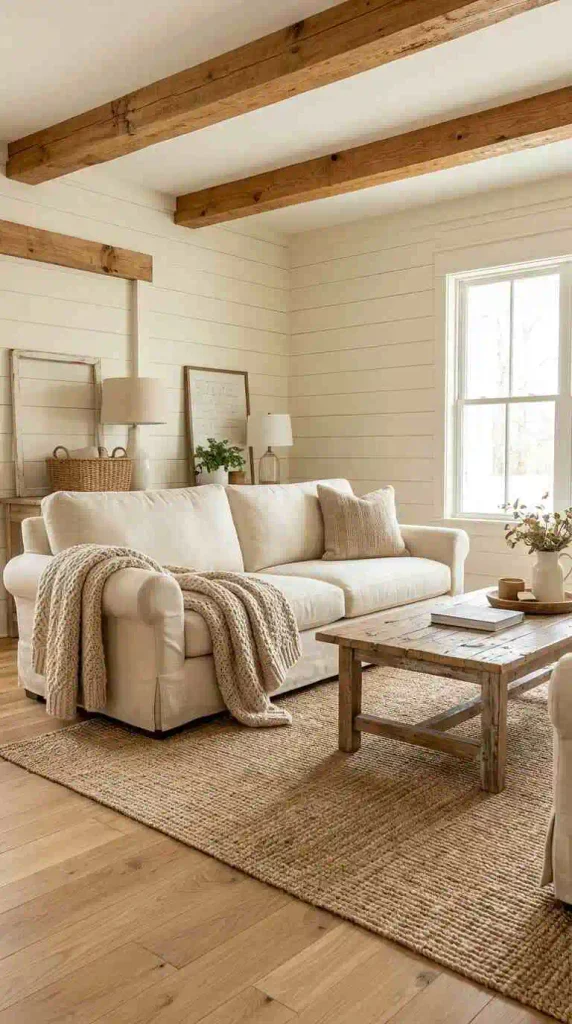
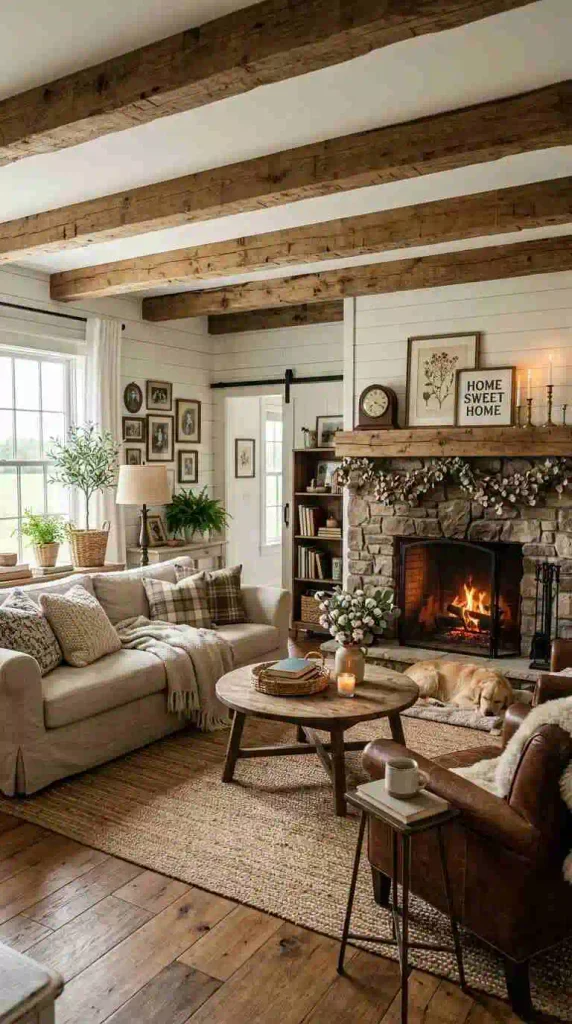
Natural wood is one of the most important elements of farmhouse interior design. Add wooden furniture through dining tables, coffee tables, benches, shelving, cabinets, and decorative beams. Reclaimed or distressed wood can create an authentic rustic feeling, while lighter oak and simple finishes can give the room a more modern farmhouse appearance. You don’t need to use wood everywhere. A few carefully selected pieces can provide enough warmth and texture. Combine wooden furniture with neutral upholstery and soft textiles to keep the space comfortable. The natural grain and imperfections of wood can also give your home character that manufactured materials often lack.
3. Choose Comfortable Furniture
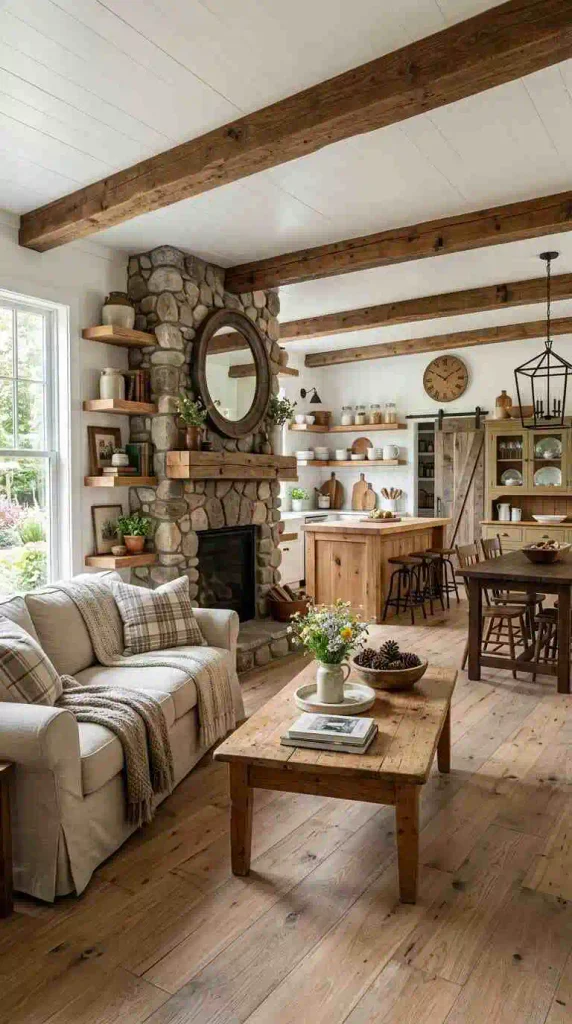
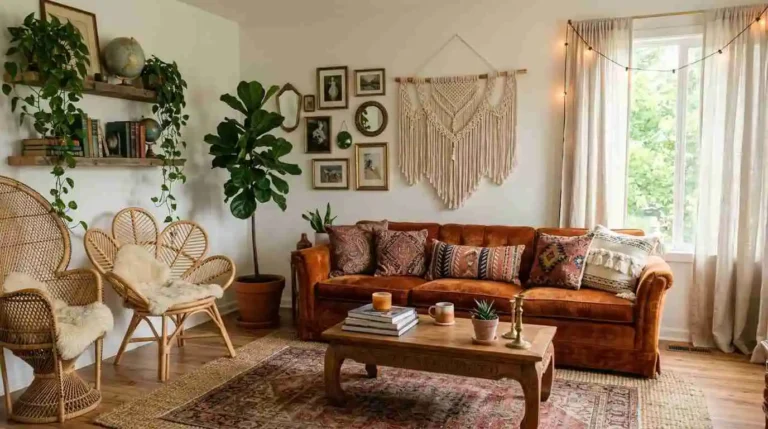
Farmhouse interiors should feel lived-in and comfortable rather than overly formal. Choose furniture with soft upholstery, practical shapes, generous seating, and natural fabrics. A large neutral sofa can become the centerpiece of a farmhouse living room, while a wooden coffee table adds warmth. Accent chairs with linen or cotton upholstery can provide additional seating without making the room feel crowded. Look for timeless silhouettes instead of furniture that follows short-lived trends. For more inspiration on selecting beautiful and functional pieces, explore [Boho Living Room Decor Ideas: Create a Cozy and Relaxed Space] and combine simple contemporary pieces with farmhouse materials.
4. Add Vintage-Inspired Details
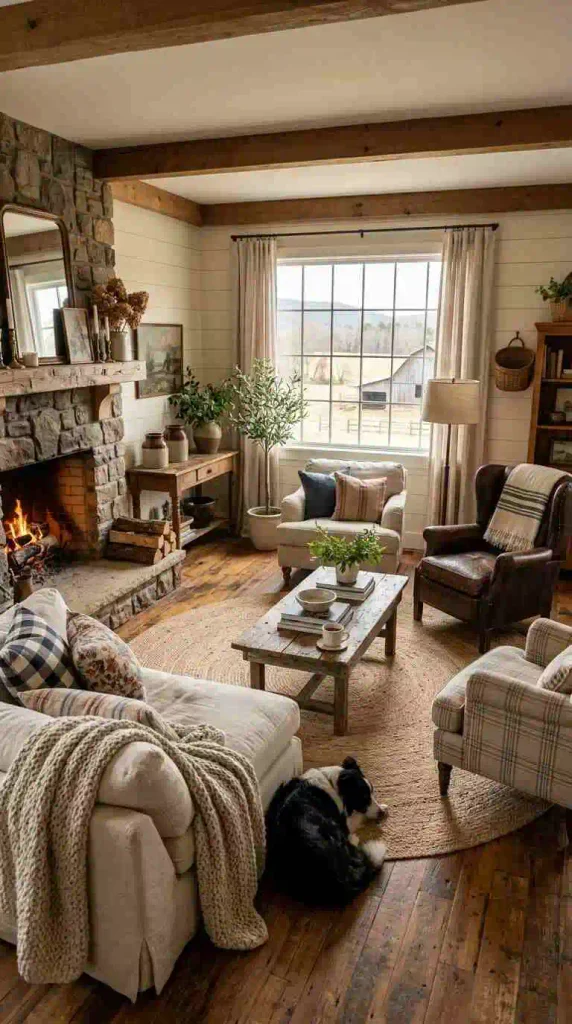
Vintage elements can give a farmhouse interior a sense of history and personality. Consider adding antique-style mirrors, old-looking frames, ceramic pitchers, vintage clocks, wooden trays, or weathered accessories. You don’t need to fill the room with old objects; a few carefully chosen pieces are enough. Mix vintage-inspired accessories with newer furniture to prevent the room from feeling outdated. Look for items with natural imperfections and simple designs that complement your color palette. The goal is to create a collected appearance rather than making everything look perfectly coordinated. Small vintage details can make a modern farmhouse interior feel more authentic and personal.
5. Create a Cozy Farmhouse Living Room
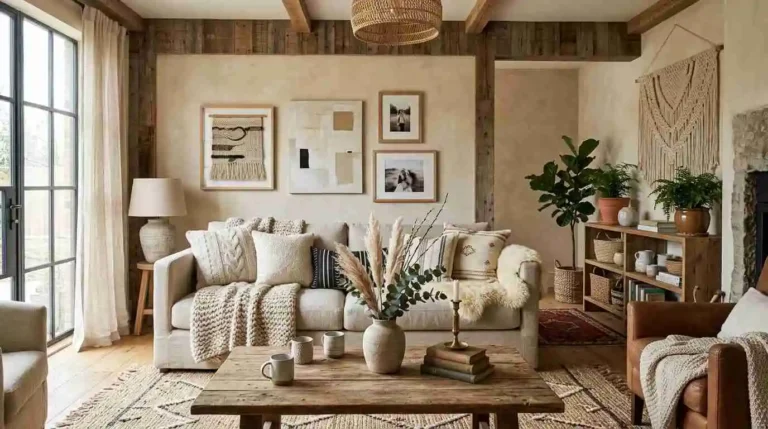
The living room is one of the easiest spaces to decorate with farmhouse style. Start with a comfortable neutral sofa, then add a wooden coffee table, textured rug, soft cushions, and woven accessories. A fireplace can become a beautiful focal point if your home has one, while simple artwork or a large mirror can complete the wall. Add baskets for blankets and everyday storage to combine practicality with decoration. Keep the arrangement open and comfortable so the room feels welcoming rather than overly styled. For more inspiration on creating warm and comfortable seating spaces, explore [Modern Bedroom Decoration Ideas: Simple Ways to Create a Clean, Stylish Space] and combine its clean organization with farmhouse warmth.
6. Style a Farmhouse Kitchen
A farmhouse kitchen combines practicality with warm, timeless details. Consider white or cream cabinets, wooden shelves, natural stone surfaces, farmhouse-style sinks, and simple hardware. Open shelving can be used to display ceramic dishes, glassware, wooden cutting boards, and everyday kitchen items. Natural wood accents can soften a mostly white kitchen and add warmth. Keep countertops organized so the space remains functional and uncluttered. You can also introduce woven baskets and vintage-inspired containers for additional storage. The farmhouse kitchen should feel welcoming and practical, with materials that become more beautiful as they are used over time.
7. Use Soft and Natural Textiles
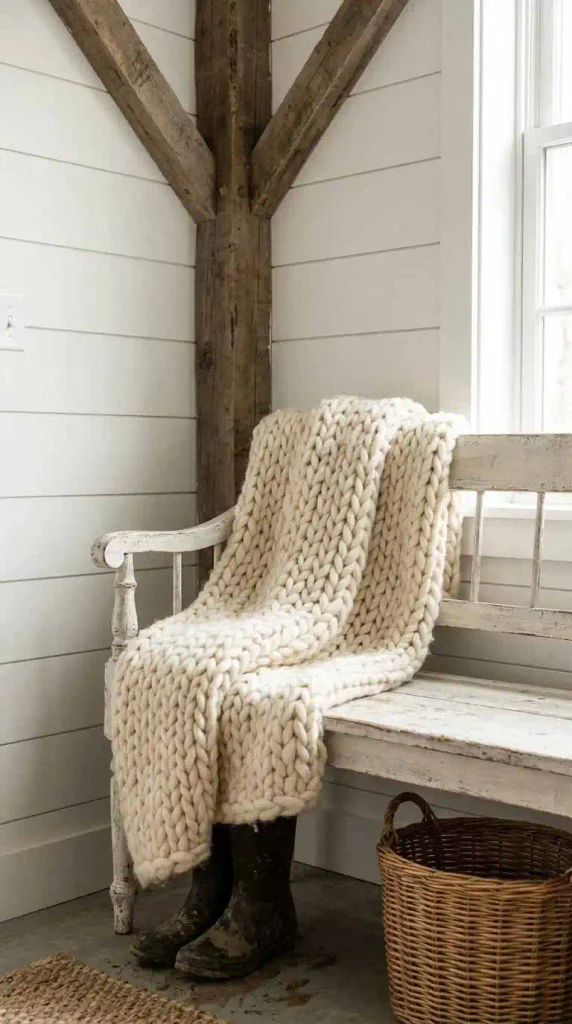
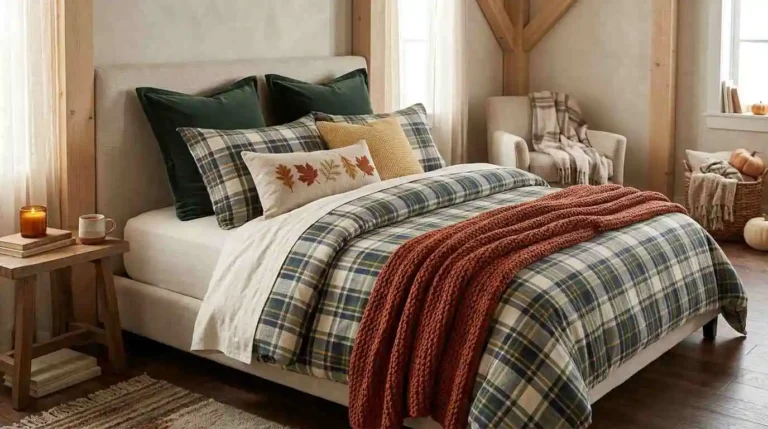
Textiles help make farmhouse interiors feel warm and comfortable. Layer linen curtains, cotton cushions, woven rugs, knitted blankets, and soft throws throughout the room. Neutral fabrics work particularly well, but you can introduce subtle stripes, checks, or small patterns for visual interest. Choose textures that look natural rather than overly polished. A woven rug can define a seating area, while a soft throw draped over a sofa adds an inviting touch. Don’t try to make every textile match perfectly. Mixing complementary textures can create the relaxed, collected appearance that makes farmhouse interiors so appealing.
8. Add Simple Farmhouse Wall Decor
Farmhouse wall decor should feel personal, simple, and connected to the overall natural aesthetic. Try wooden signs, landscape artwork, botanical prints, simple mirrors, vintage-inspired frames, or woven wall pieces. A large mirror with a wooden frame can make a room feel brighter while adding character. Instead of decorating every wall, choose one or two areas for stronger visual interest and leave the rest relatively simple. This keeps the room from feeling cluttered. Black frames and hardware can also create subtle contrast against cream or white walls, giving traditional farmhouse decor a slightly more modern appearance.
9. Bring Nature Indoors
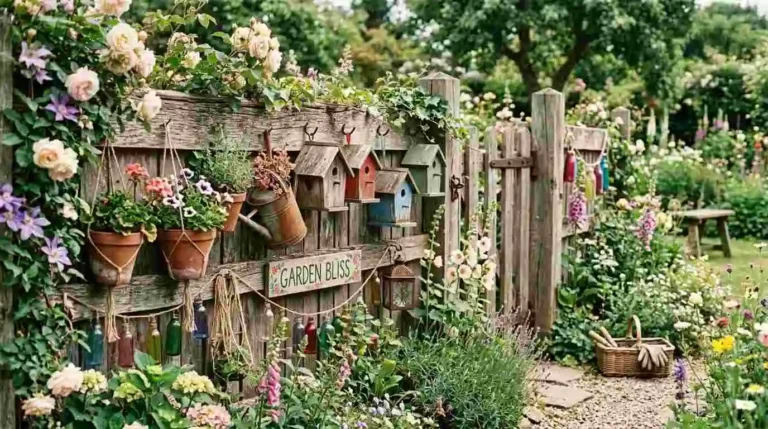
Plants, branches, dried flowers, and natural decorative elements can enhance the farmhouse atmosphere. Place greenery in ceramic pots, flowers in simple glass vases, or branches in large wooden containers. You can also use dried grasses for a softer seasonal look. Natural elements add color and texture without requiring a complicated palette. If you prefer low-maintenance decoration, dried arrangements can last for a long time while maintaining their rustic appearance. Keep plant displays simple and avoid overcrowding surfaces. A few natural elements placed throughout the room can make the interior feel fresh, relaxed, and connected to the outdoors.
10. Mix Traditional and Modern Elements
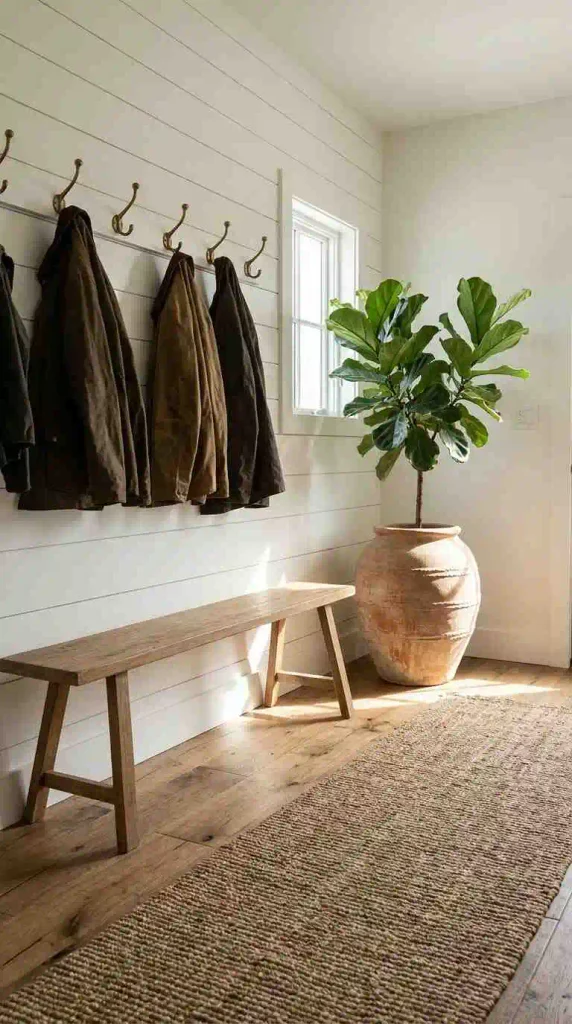
Modern farmhouse style works beautifully when traditional materials are combined with contemporary design. Pair rustic wood with clean-lined furniture, vintage accessories with modern lighting, or classic architectural details with simple neutral decor. This prevents the home from looking too old-fashioned while maintaining farmhouse warmth. For example, a traditional wooden dining table can be paired with modern chairs and a simple pendant light. You can also use black metal fixtures to add contemporary contrast. The goal is to create a balanced interior where old and new elements complement each other instead of competing for attention.
Final Thoughts
Farmhouse interior decor is all about creating a home that feels warm, comfortable, natural, and timeless. Focus on neutral colors, natural wood, cozy textiles, comfortable furniture, vintage-inspired details, and simple accessories. You don’t need to completely redesign your home to achieve the look. Start with a few key elements and gradually build a style that feels authentic to you. For more ideas on combining classic warmth with contemporary design, explore [Bedroom Color Ideas: Simple Colors to Make Your Room Feel Calm and Cozy]. With thoughtful choices, farmhouse decor can create a welcoming home that feels stylish without losing its comfortable and lived-in character.
4 Comments