
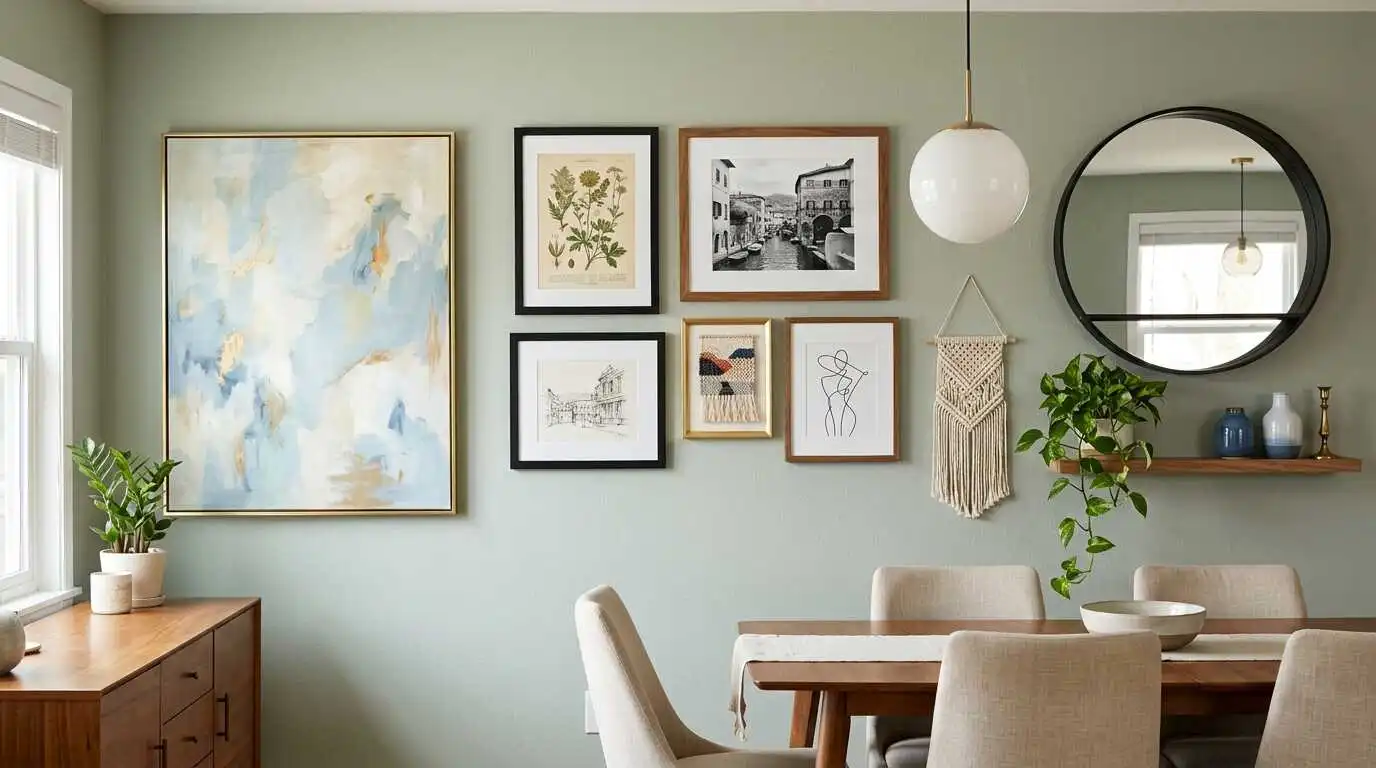
Dining Room Wall Decor Ideas: Stylish Ways to Transform Your Space

Dining room walls can completely change the atmosphere of your home. With the right artwork, mirrors, shelves, colors, and decorative accents, you can turn an empty wall into a beautiful focal point. Whether your style is modern, farmhouse, minimalist, rustic, or cozy, these dining room wall decor ideas can help you create a space that feels welcoming and thoughtfully designed.
1. Create a Gallery Wall With Favorite Artwork
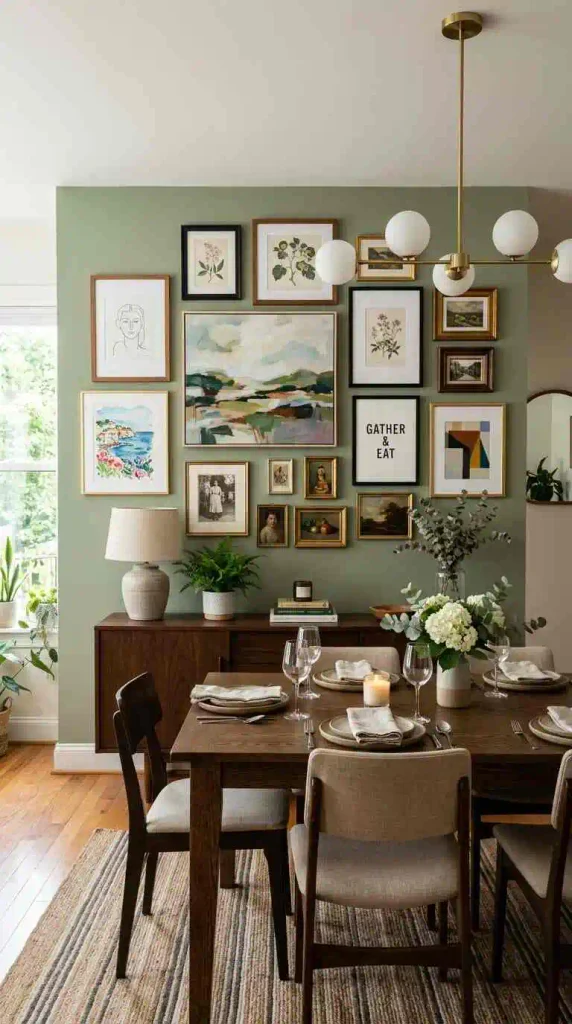
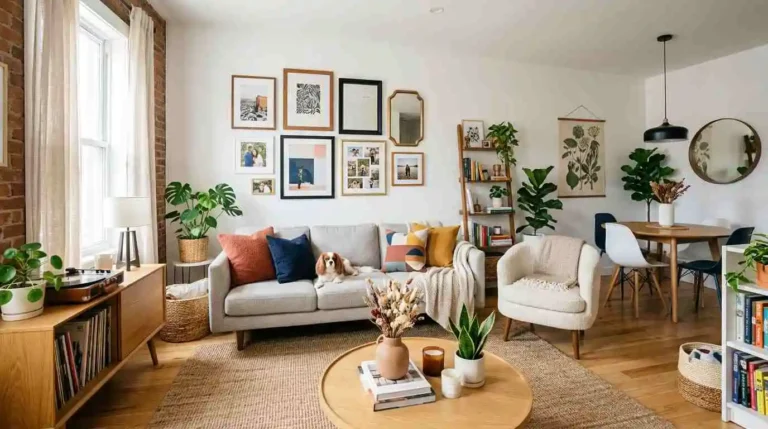
A gallery wall is an easy way to give your dining room personality. Choose a collection of artwork, photographs, illustrations, or prints that complement your home’s color palette. You can use matching frames for a clean appearance or mix different frame styles for a more relaxed and collected look.
Before hanging anything, arrange the pieces on the floor to experiment with spacing and placement. Keep the overall arrangement balanced rather than making every frame perfectly symmetrical. A gallery wall works particularly well above a dining bench, sideboard, or a large empty wall.
For a cohesive look, repeat colors from your dining chairs, rug, curtains, or table accessories in the artwork. This helps the wall decoration feel connected to the rest of the room instead of appearing separate from the existing decor.
Read more: Bedroom Color Ideas: Simple Colors to Make Your Room Feel Calm and Cozy
2. Add a Large Statement Mirror
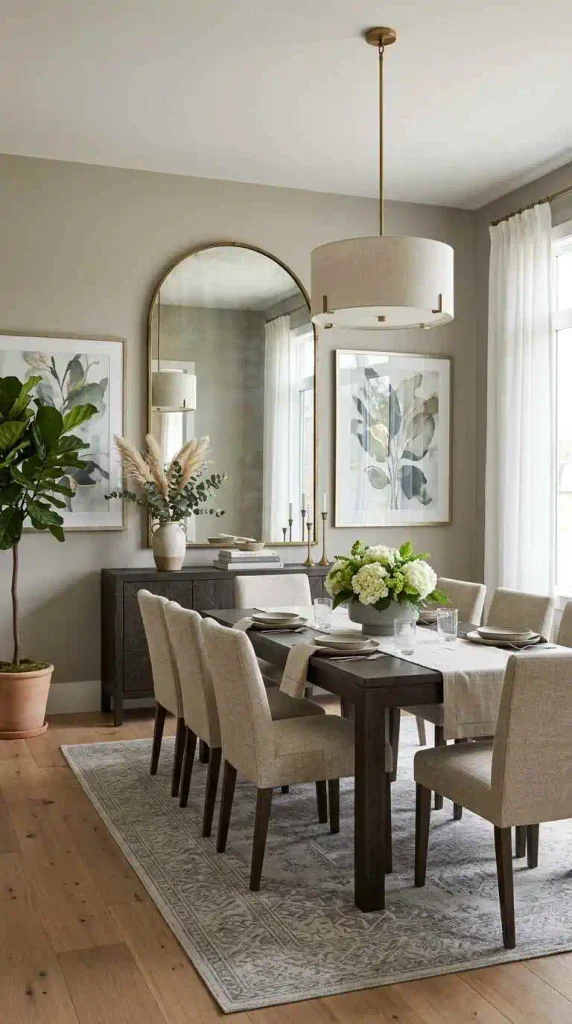
A large mirror can make a dining room feel brighter, more open, and elegant. Mirrors reflect light and can visually expand the room, making them especially useful in smaller dining areas.
Choose a frame that matches your decorating style. A simple black frame works beautifully in modern interiors, while a natural wood frame can create a warmer atmosphere. Ornate frames can add character to traditional or vintage-inspired spaces.
Place the mirror on the wall where it can reflect a window, beautiful lighting fixture, or attractive part of the room. Avoid positioning it where it reflects clutter.
A large mirror doesn’t need much additional decoration around it. When selected carefully, it can become the main focal point of the dining room while adding both function and style.
3. Install Floating Shelves for Decor
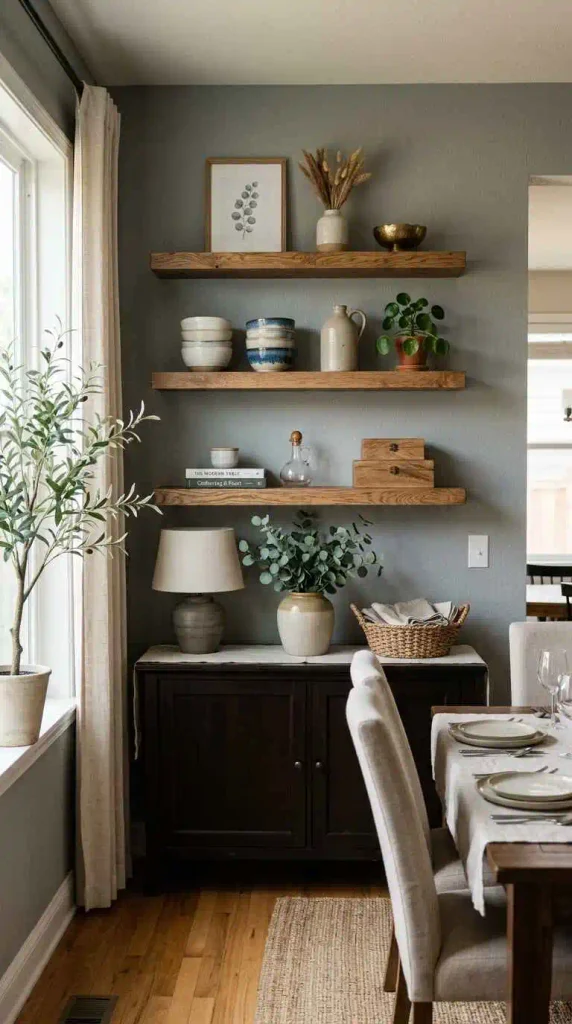
Floating shelves can turn an empty dining room wall into a practical decorative feature. They provide space for displaying artwork, ceramics, plants, candles, books, and other accessories without taking up floor space.
Use two or three shelves arranged vertically or horizontally depending on the size of your wall. Keep the styling simple by combining objects of different heights and textures.
For example, place a few books beside a small vase, ceramic bowl, framed print, or plant. Leave some empty space between groups so the shelves don’t look overcrowded.
Choose shelf materials that complement your dining furniture. Natural wood adds warmth, while white or dark shelves can create a more contemporary appearance. Floating shelves are especially useful when you want wall decor that can easily be changed throughout the year.
Read more: DIY Wall Decor Ideas: Simple Projects to Fill Your Walls With Style
4. Use a Bold Accent Wall Color
Sometimes the simplest wall decoration is a beautiful color. Painting one dining room wall in a bold or contrasting shade can create a strong focal point without requiring many accessories.
Deep green, warm terracotta, muted blue, charcoal, or rich beige can add personality while maintaining an elegant atmosphere. If your furniture is already colorful, consider a softer neutral shade to create balance.
An accent wall works particularly well behind the dining table because it naturally draws attention to the main gathering area. You can keep the remaining walls lighter so the room doesn’t feel too dark.
Add simple artwork, lighting, or a mirror to the accent wall if desired. However, avoid adding too many decorations. Let the color itself become the statement.

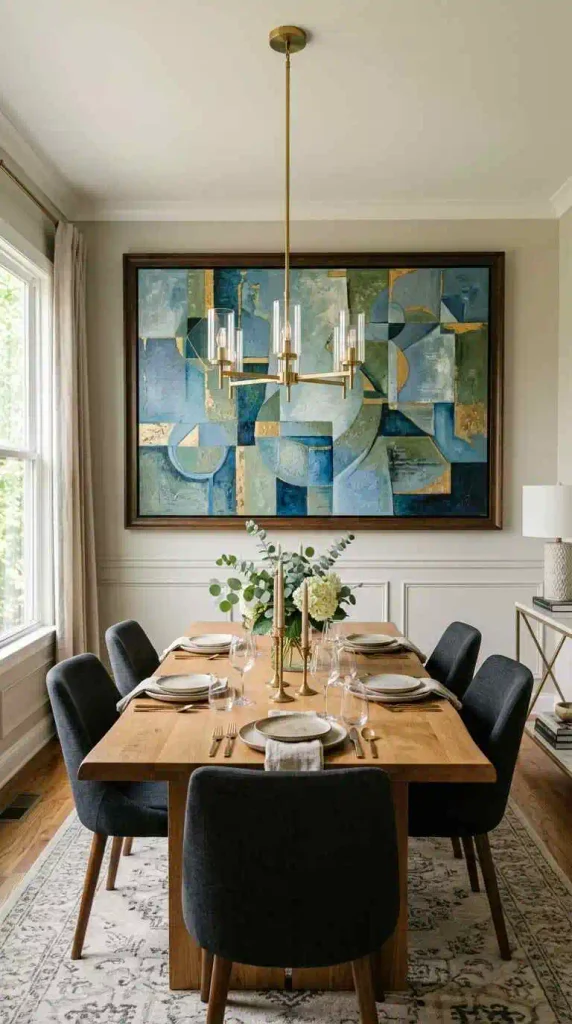
5. Hang Oversized Artwork Above the Table
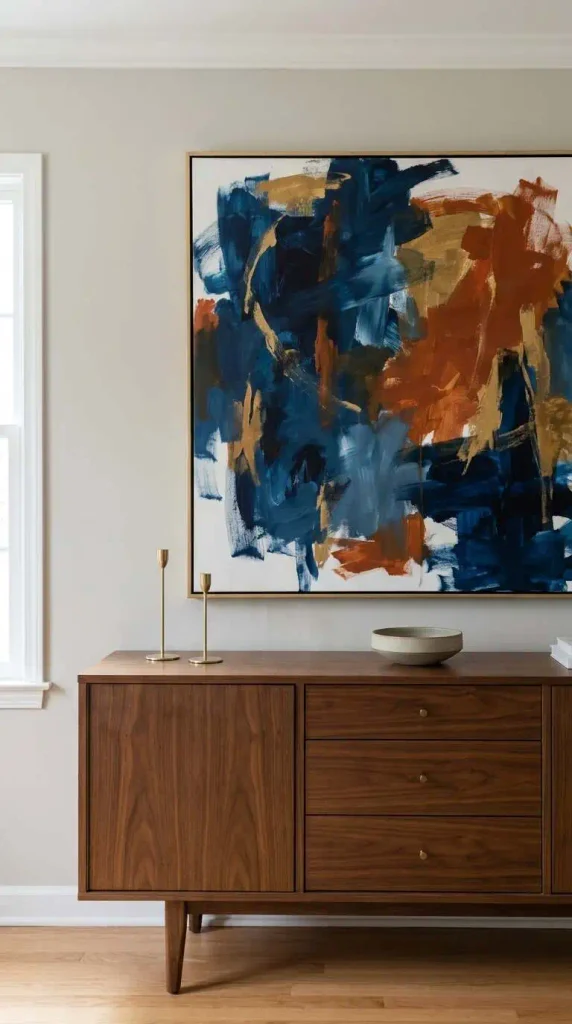
One large piece of artwork can have more impact than several small decorations. An oversized painting, abstract print, landscape, or botanical artwork can instantly give your dining room a polished appearance.
Choose artwork that is proportional to your dining table and wall. A piece that is too small may look lost, while something extremely large can overwhelm the room.
Consider colors that connect with your existing furniture and accessories. Neutral artwork can create a sophisticated appearance, while colorful art can become a lively focal point.
Hang the artwork at a comfortable viewing height and center it with the dining table. This creates a natural visual relationship between the wall and furniture.
A single statement piece is an excellent choice if you prefer minimalist dining room decor.
6. Bring Nature to the Dining Room Wall
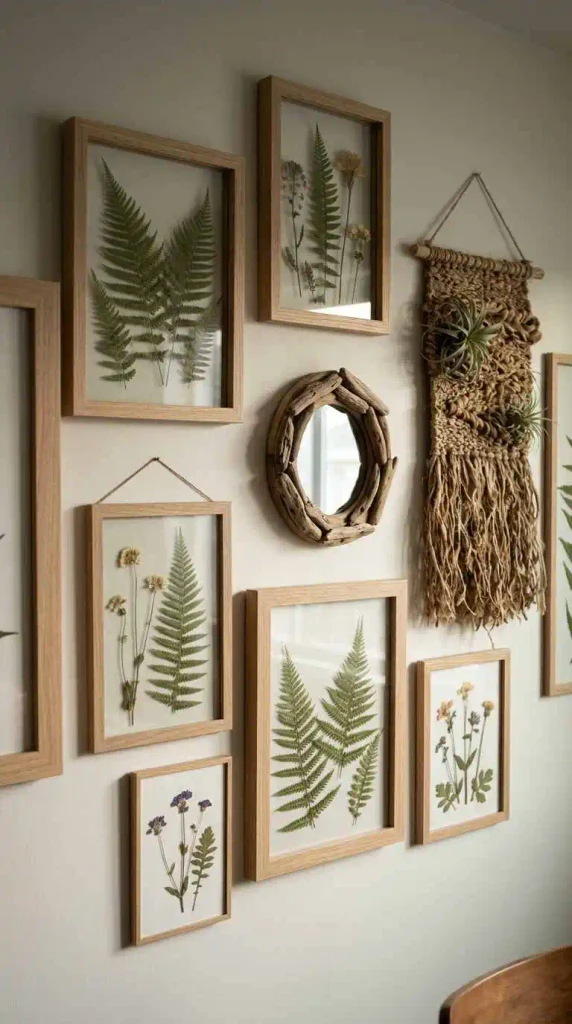
Natural elements can make a dining room feel warm and inviting. Botanical prints, dried flowers, woven wall hangings, wooden decorations, and plant-inspired artwork can all bring an organic touch to the space.
You can create a simple arrangement of botanical prints in matching frames or hang a large nature-inspired artwork above the sideboard. Woven baskets can also be arranged on the wall for texture and visual interest.
Natural materials work particularly well with wooden dining tables, neutral fabrics, and earthy color palettes. They can soften a room that contains many hard surfaces such as glass, metal, and polished furniture.
The goal is to create a subtle connection with nature rather than covering the entire wall with decorations. A few carefully selected natural accents can make the dining room feel more relaxed.
Read more: Home Decor Style Ideas: Simple Ways to Find and Create Your Own Look
7. Decorate With a Stylish Wall Clock
A wall clock can be both practical and decorative. Instead of choosing a small clock that disappears against the wall, consider a larger design that acts as a statement piece.
Wooden clocks work well in farmhouse and rustic dining rooms, while simple black or metallic designs can complement modern spaces. For a traditional interior, consider a classic clock with an elegant frame.
Place the clock on an empty wall where it can be easily seen from the dining table. You can keep the surrounding area relatively simple so the clock remains the focal point.
A decorative clock is especially useful if you want to add personality without filling the wall with multiple accessories. It combines everyday functionality with visual appeal.
8. Create a Cozy Plate Display
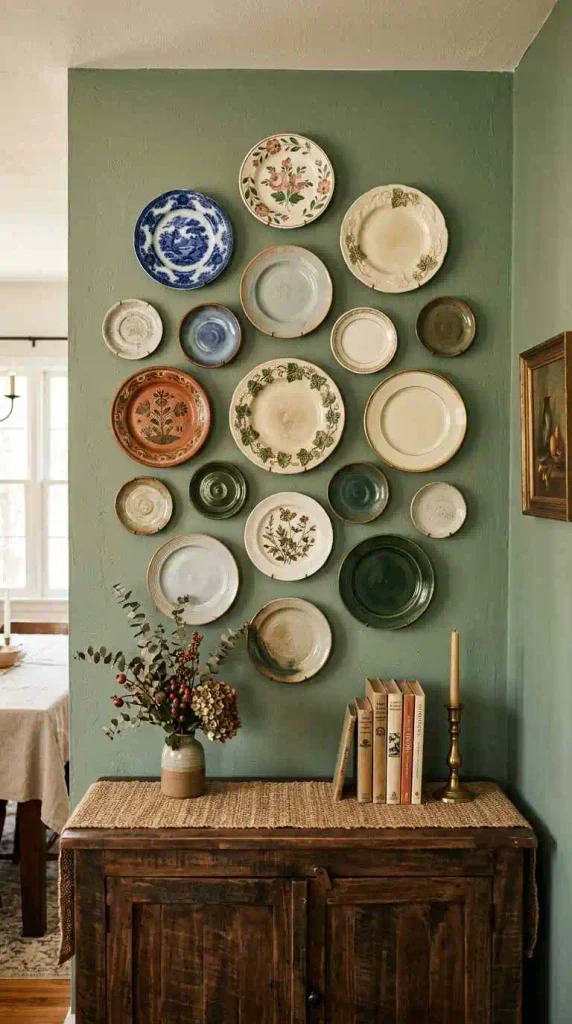
Decorative plates can become beautiful wall art in a dining room. Choose plates with interesting patterns, textures, or colors and arrange them in a visually balanced composition.
You can use plates that share a similar color palette or intentionally mix different designs for a more collected look. Arrange larger plates in the center and smaller ones around them, or create a simple horizontal display.
This idea works especially well with farmhouse, cottage, traditional, and boho-inspired interiors. Handmade ceramic plates can add extra texture and character.
Make sure the plates are securely mounted using appropriate wall-hanging hardware. Since dining rooms can have a lot of furniture and accessories, keep the plate arrangement focused rather than adding too many other wall decorations nearby.
9. Add Wood Paneling for Warmth
Wood wall paneling can completely transform the atmosphere of a dining room. It adds architectural interest, warmth, and texture while creating a beautiful backdrop for furniture.
You can use full-wall paneling for a dramatic effect or install panels on one feature wall. Simple vertical panels can make the ceiling appear taller, while horizontal designs can visually emphasize the width of the room.
Choose a wood finish that complements your dining table and chairs. Light wood creates an airy appearance, while darker finishes offer a richer and more dramatic look.
If real wood paneling isn’t practical, decorative wall molding or wood-look materials can provide a similar visual effect. Once the wall has enough texture, keep additional decorations relatively simple.
Read more: Cozy Living Room Ideas Aesthetic: Create a Warm Space You’ll Never Want to Leave
10. Use Wall Sconces as Decorative Features
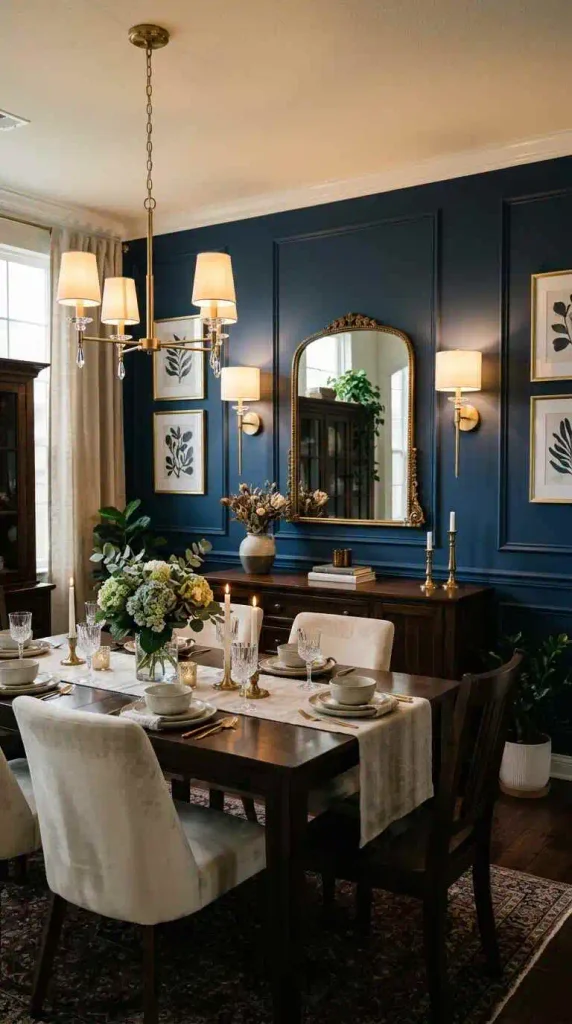
Lighting can become an important part of your dining room wall decor. Wall sconces provide useful illumination while adding style and character to an otherwise empty wall.
Place sconces on either side of a large artwork, mirror, or sideboard to create symmetry. You can also install a pair of simple fixtures on either side of a feature wall.
Choose designs that complement your dining room style. Black metal works well for modern interiors, brass can add warmth and elegance, and natural materials can create a relaxed atmosphere.
Warm lighting is especially effective in dining rooms because it creates an intimate atmosphere during meals and gatherings. Instead of treating lighting as an afterthought, make it part of your overall wall design.
11. Display Family Photos and Memories
Your dining room can be a wonderful place to display meaningful family photographs and memories. Create a small photo wall using images from special occasions, travels, celebrations, or everyday moments.
For a sophisticated appearance, use frames in the same color and style. If you prefer a casual look, mix different frames while keeping the photographs visually connected.
You can arrange the photographs in a grid for a clean appearance or create a more relaxed gallery-style display.
Keep the number of photographs manageable so the wall doesn’t become visually overwhelming. Choose images that make you happy and contribute to the welcoming atmosphere of the dining room.
Personal photographs can make a dining area feel more meaningful because the room becomes connected to the memories created around the table.
12. Style the Wall Above a Sideboard
The wall above a dining room sideboard is an ideal place to create a decorative focal point. You can use a large mirror, artwork, framed prints, floating shelves, or a combination of accessories.
Start with one main piece, such as an oversized mirror or painting, and build around it with smaller decorative objects if needed. Keep the arrangement proportional to the sideboard so neither the furniture nor the wall decor feels too dominant.
You can also place lamps, vases, books, or plants on the sideboard itself to connect the wall decorations with the furniture below.
This approach creates a layered look and makes the sideboard feel like an intentional part of the dining room design rather than simply a storage piece.
Read more: Neutral Living Room Ideas: Simple Ways to Create a Calm, Timeless Space
Final Thoughts
Beautiful dining room wall decor doesn’t have to be complicated. From gallery walls and oversized artwork to mirrors, floating shelves, accent colors, natural textures, and personal photographs, there are many ways to transform an empty wall.
Choose decorations that complement your dining furniture and reflect your personal style. Most importantly, leave enough breathing room so the space doesn’t feel crowded. With a few thoughtful choices, your dining room walls can become a stylish backdrop for everyday meals, family gatherings, and memorable moments.
One Comment